
Marrakech is a city that gets under your skin. The moment you step into the Medina, your senses go into overdrive. The smell of spices, the clatter of the souks, the call to prayer drifting across rooftops. It is chaotic, beautiful, overwhelming and utterly unforgettable.
Day 1: Arriving in the Medina, Jemaa el-Fna and Dinner at Mö-Mö
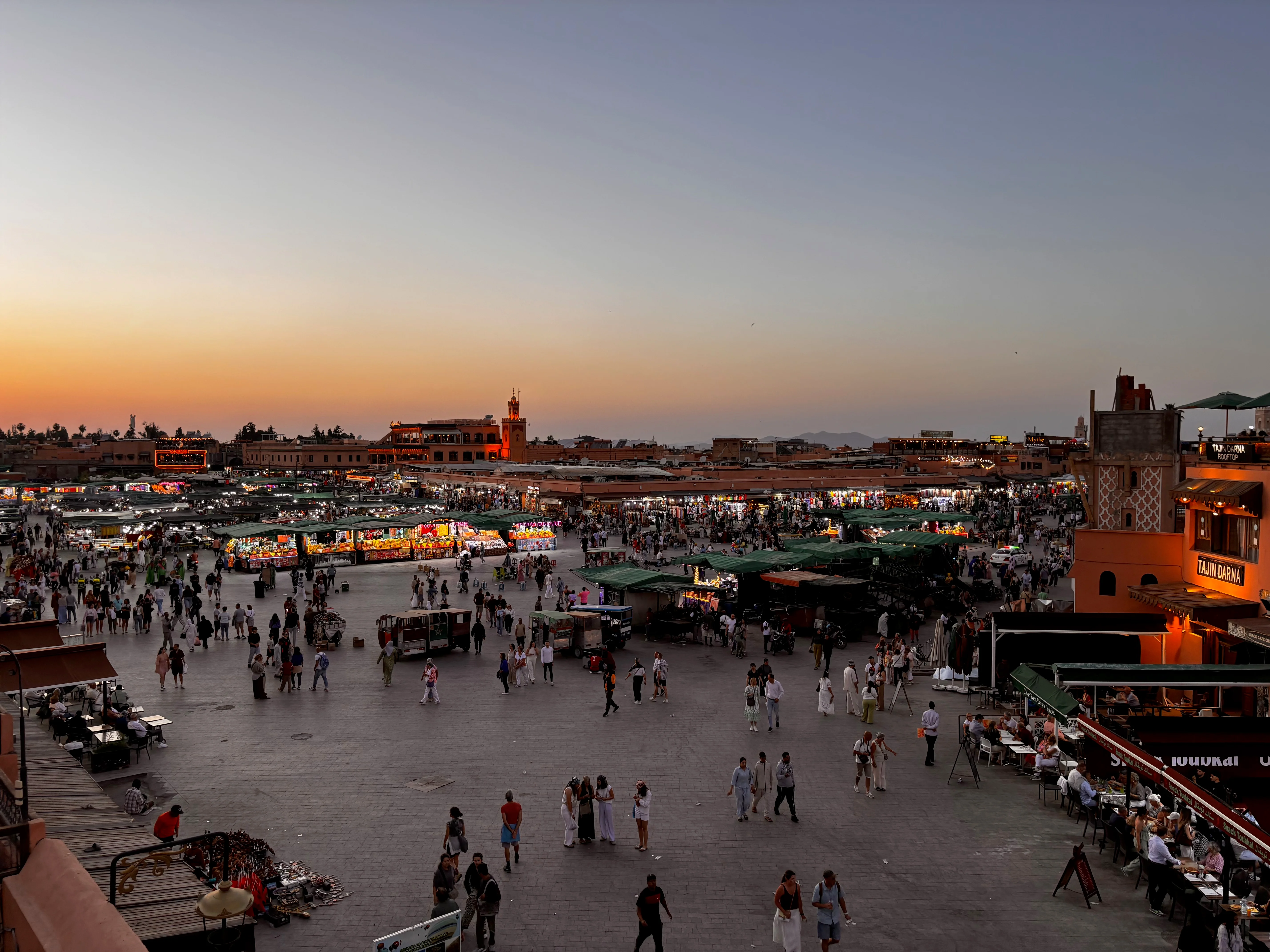
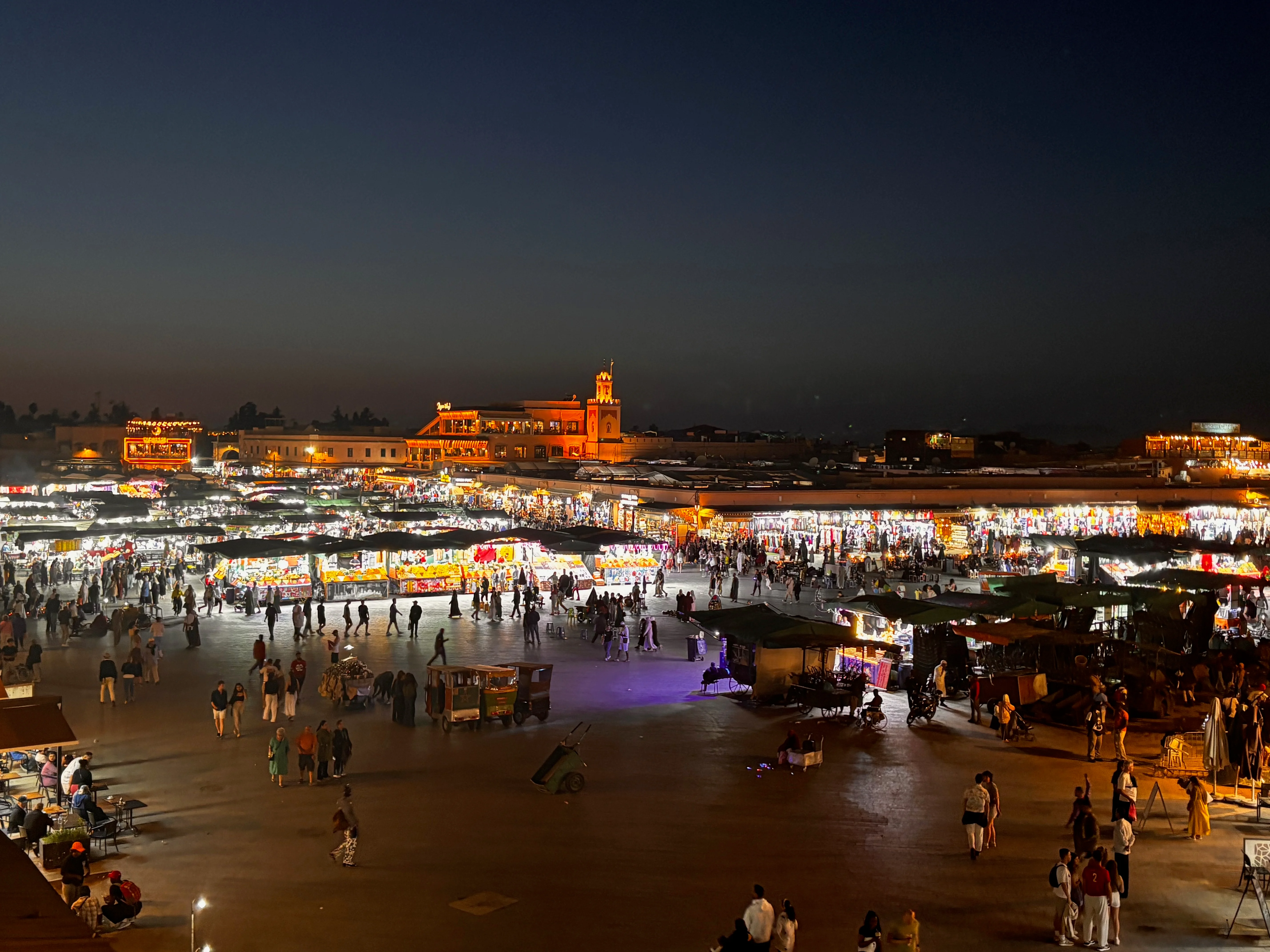
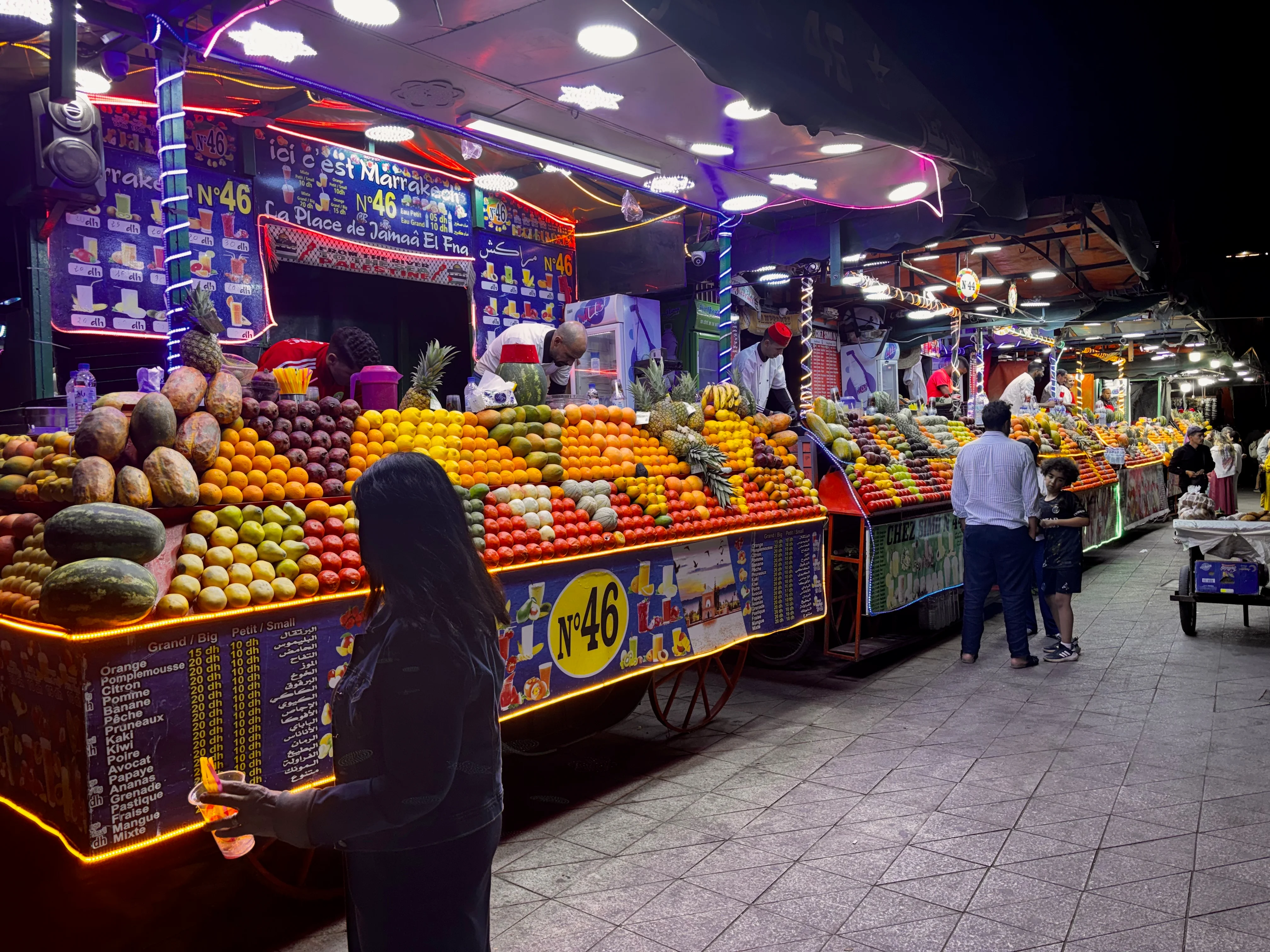
I walked through Jemaa el-Fna for the first time and immediately understood what all the fuss was about. The square is the beating heart of the Medina, packed with food stalls, trinket vendors and, sadly, chained monkeys used as photo props. Please do not support those businesses. It is cruel. Just be aware: the old part of Marrakech is not accessible by car. Depending on where your riad sits, you may face a fifteen-minute walk from where your taxi drops you off, through a maze of narrow alleyways.
Top Tip: Book a taxi in advance through your accommodation or Booking.com rather than haggling at the airport. It takes the stress out of arrival. Expect to pay around £10.
Accommodation:
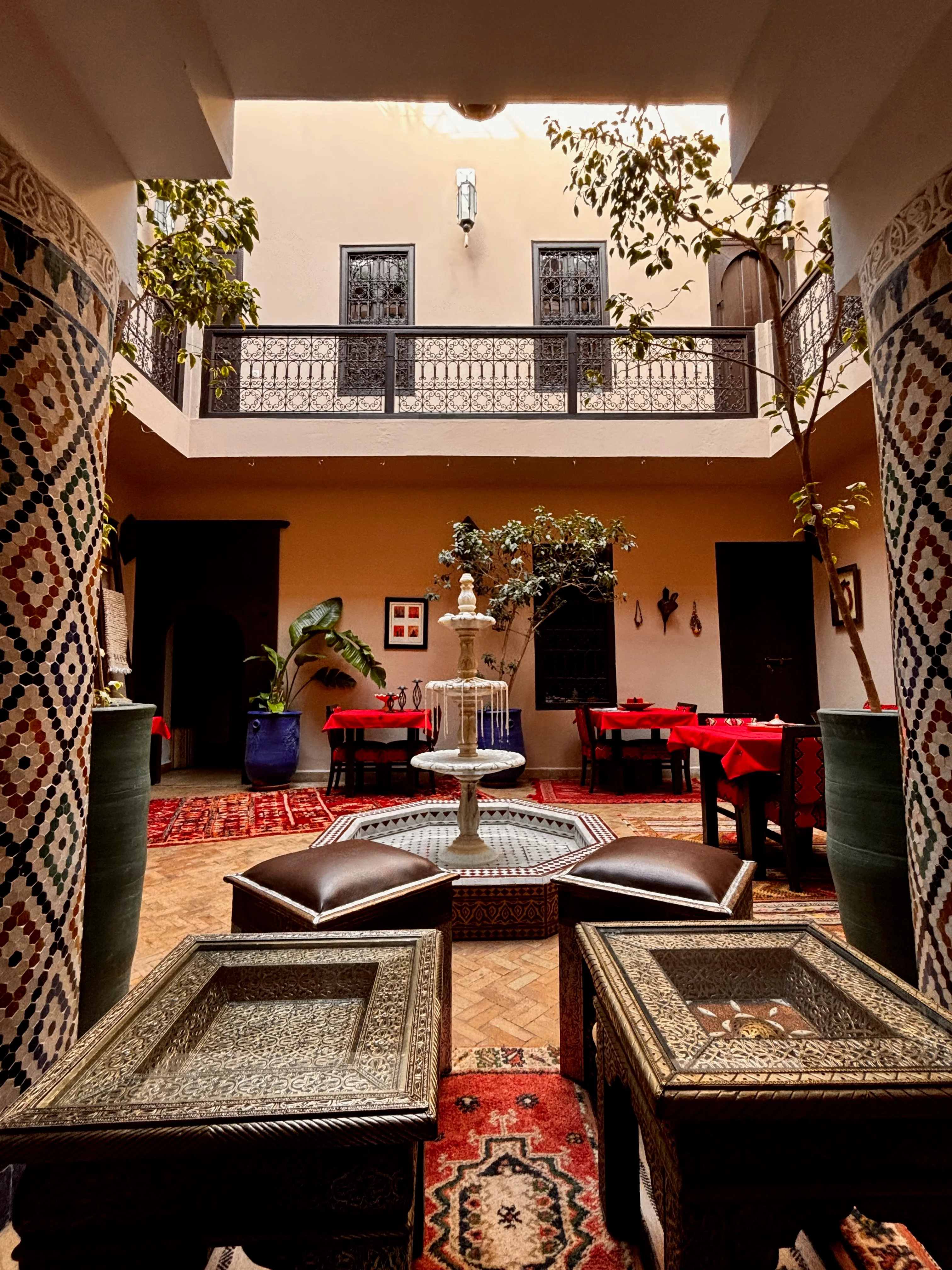
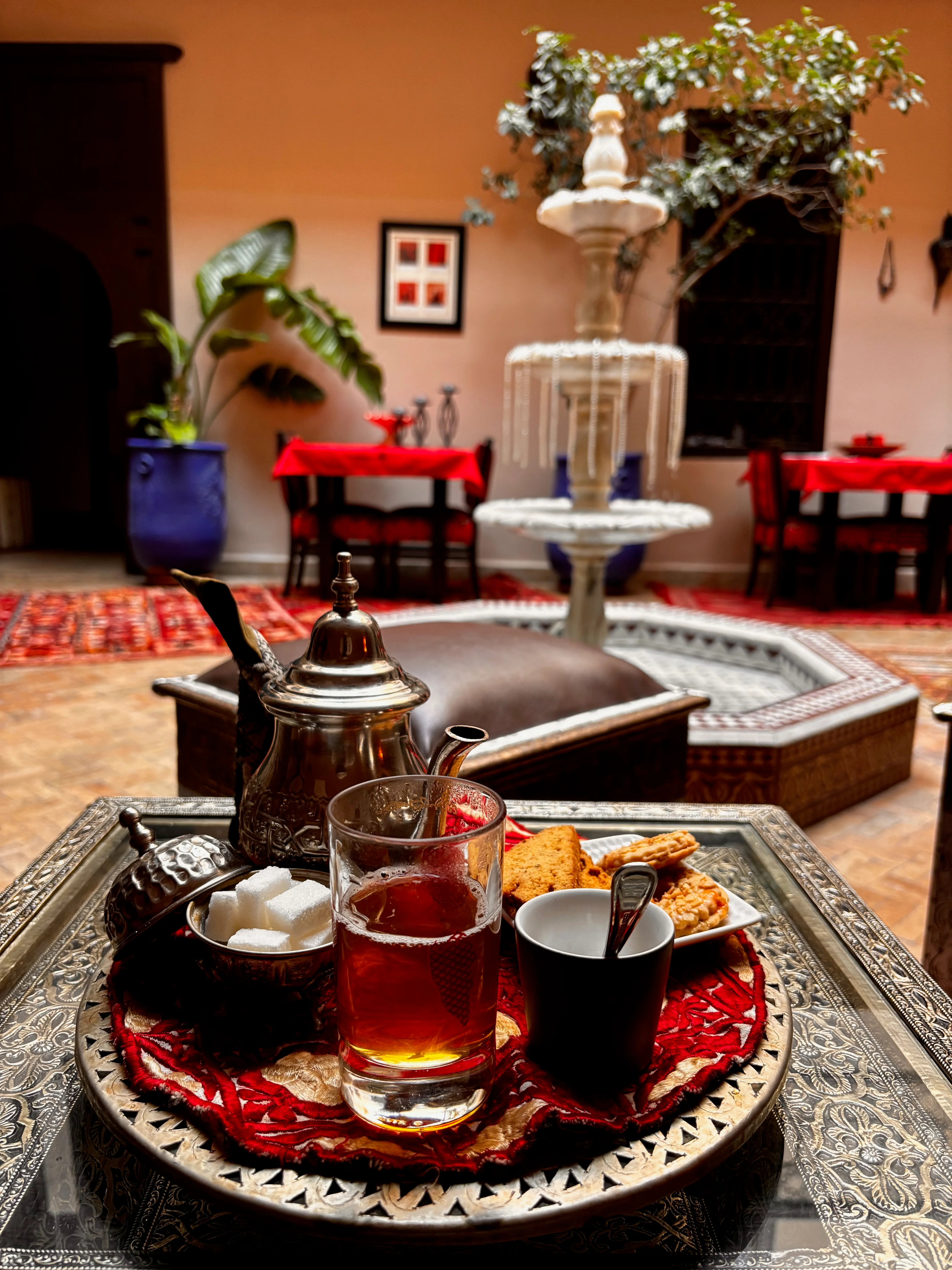
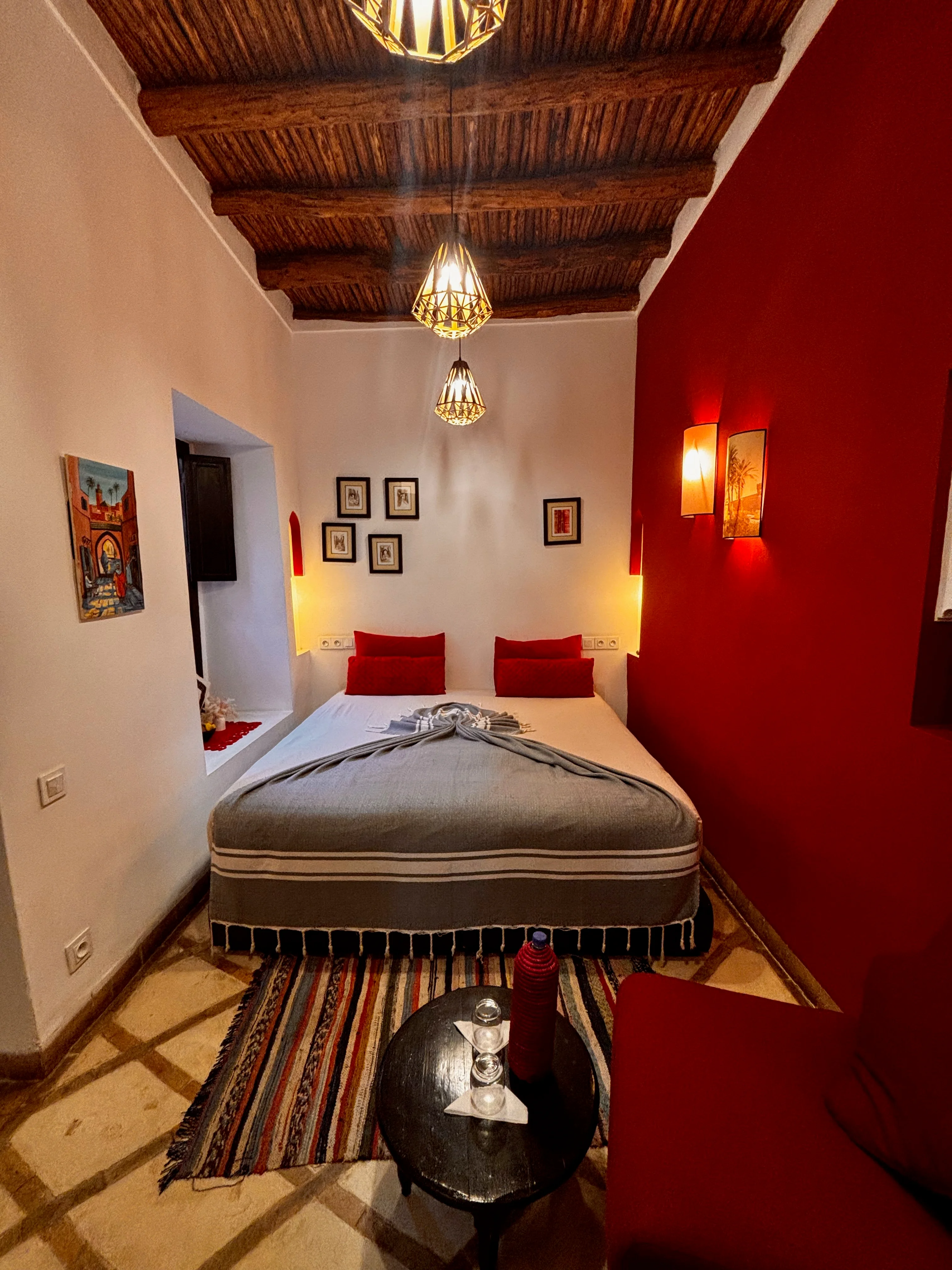
I stayed at Riad Boussa, highly rated, budget-friendly and just off the main square. The staff were warm and immediately put me at ease. If you have not yet booked tours or experiences, they can help with that too. A riad is a traditional Moroccan home or palace built around an inward-facing courtyard or garden. They are the best way to stay in the Medina. One thing to note: riads are small and intimate. You will absolutely hear your neighbours.
For the evening, I went to Mö-Mö, a modern take on Moroccan cuisine with a rooftop terrace overlooking the square. Book early if you want to catch the sunset. The view is spectacular. Honestly though, I found the food overrated and the prices steep. The queue stretching out the door suggests plenty of others disagree. Afterwards, I wandered the square and surrounding side streets, which reminded me immediately of the Grand Bazaar in Istanbul.
Day 2: Bahia Palace, Le Jardin Secret, Dar El Bacha and a Food Tour
Breakfast at the Riad was a feast: jams, sweet cakes and a rich coffee. A wonderful start to the day.
I strolled to Bahia Palace, which costs 100 MAD to enter and only accepts cash. The tiling is intricate and the colours are striking, but I left feeling it was not worth the price. Each room felt similar, with little to bring Morocco’s rich history to life. Arrive before 10am if you go, as the tourist groups descend quickly after that. Much of the palace is also under refurbishment at present, leaving several areas inaccessible.
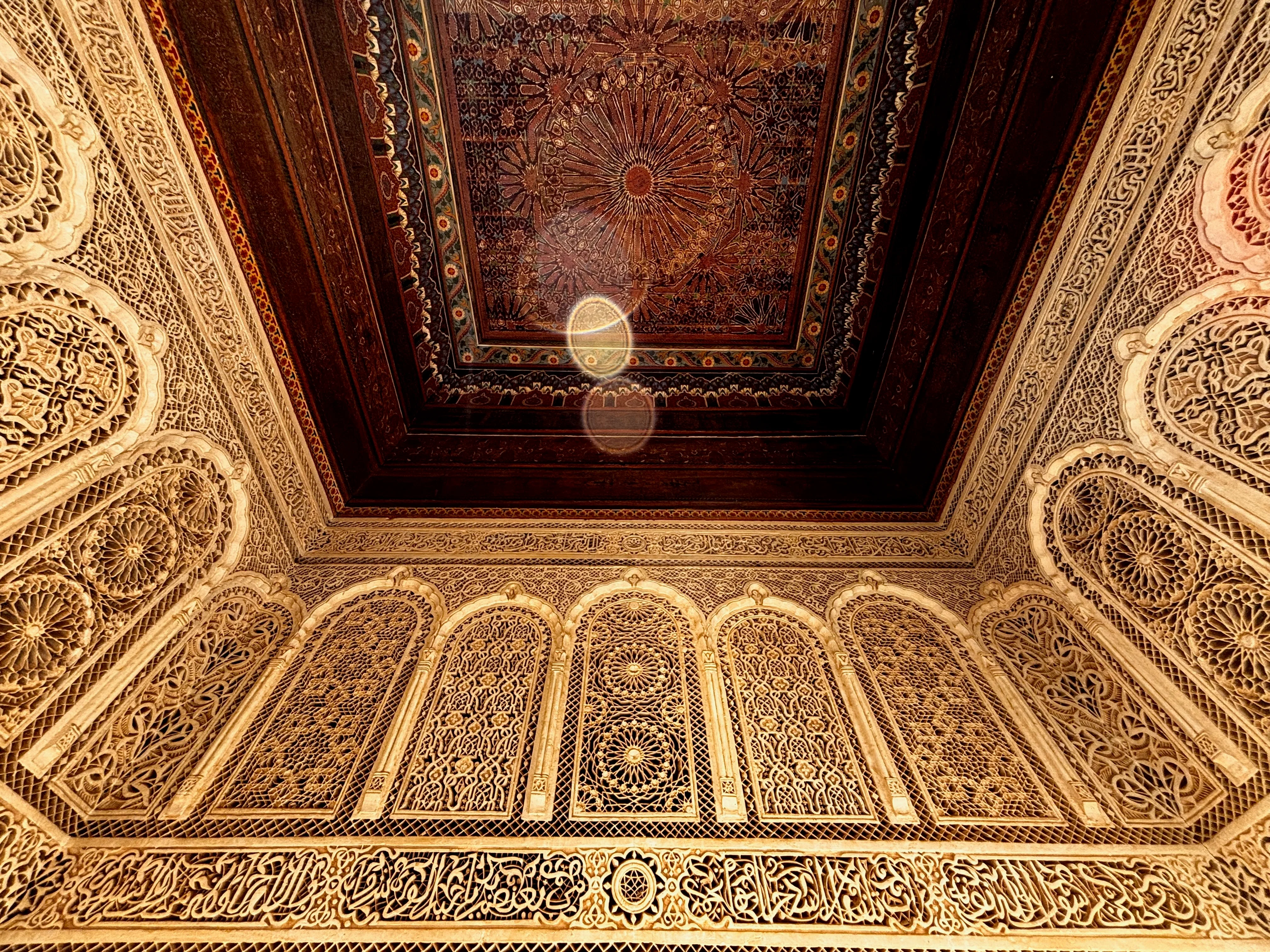
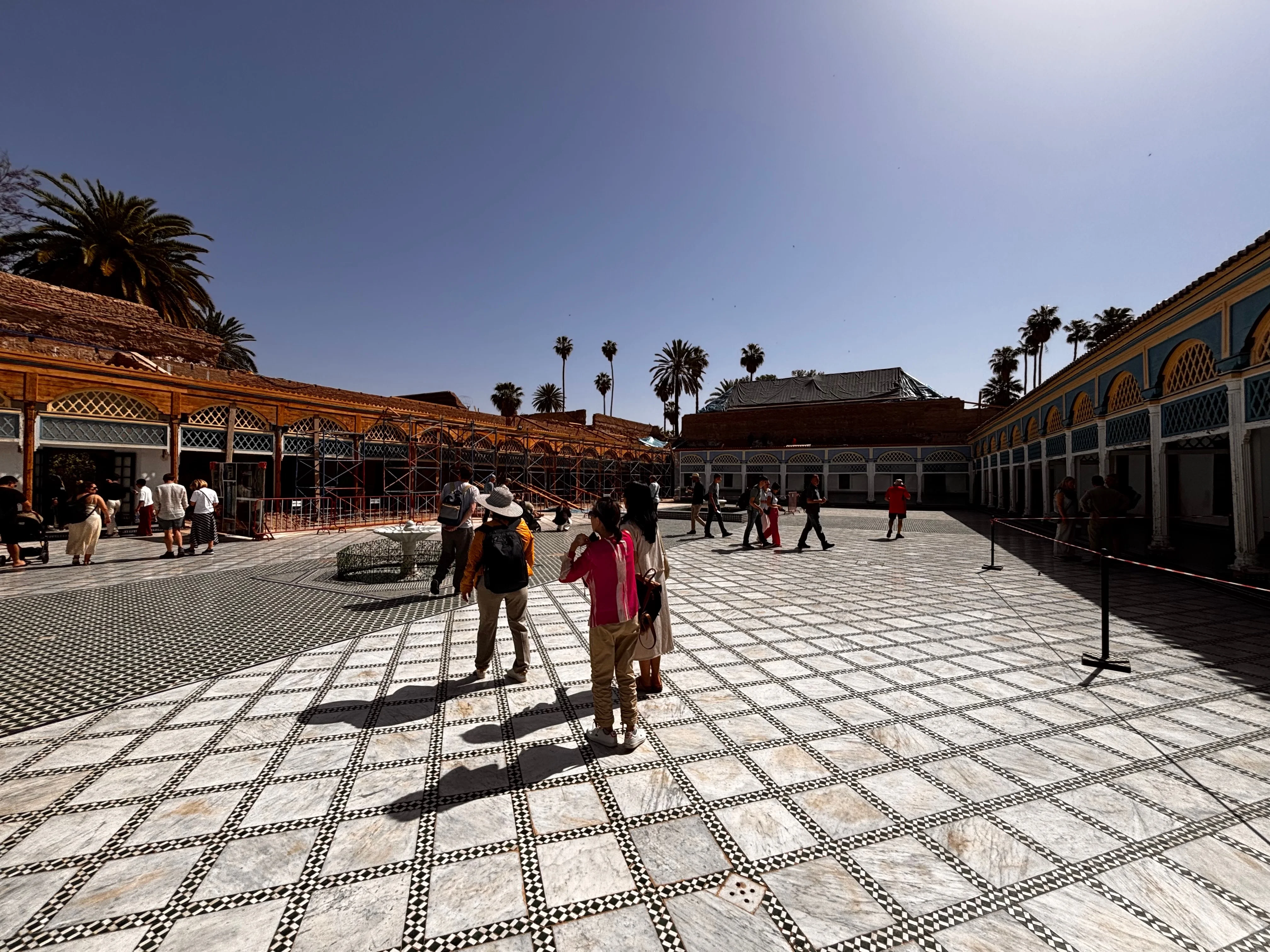
Top Tip: If you don’t have time, skip Bahia Palace in favour of Dar El Bacha. It is cheaper, better maintained and far more rewarding.
My next stop was Le Jardin Secret, a large riad with two beautiful gardens growing plants and trees from five continents. After the noise of the surrounding souks, it feels like a genuine oasis.
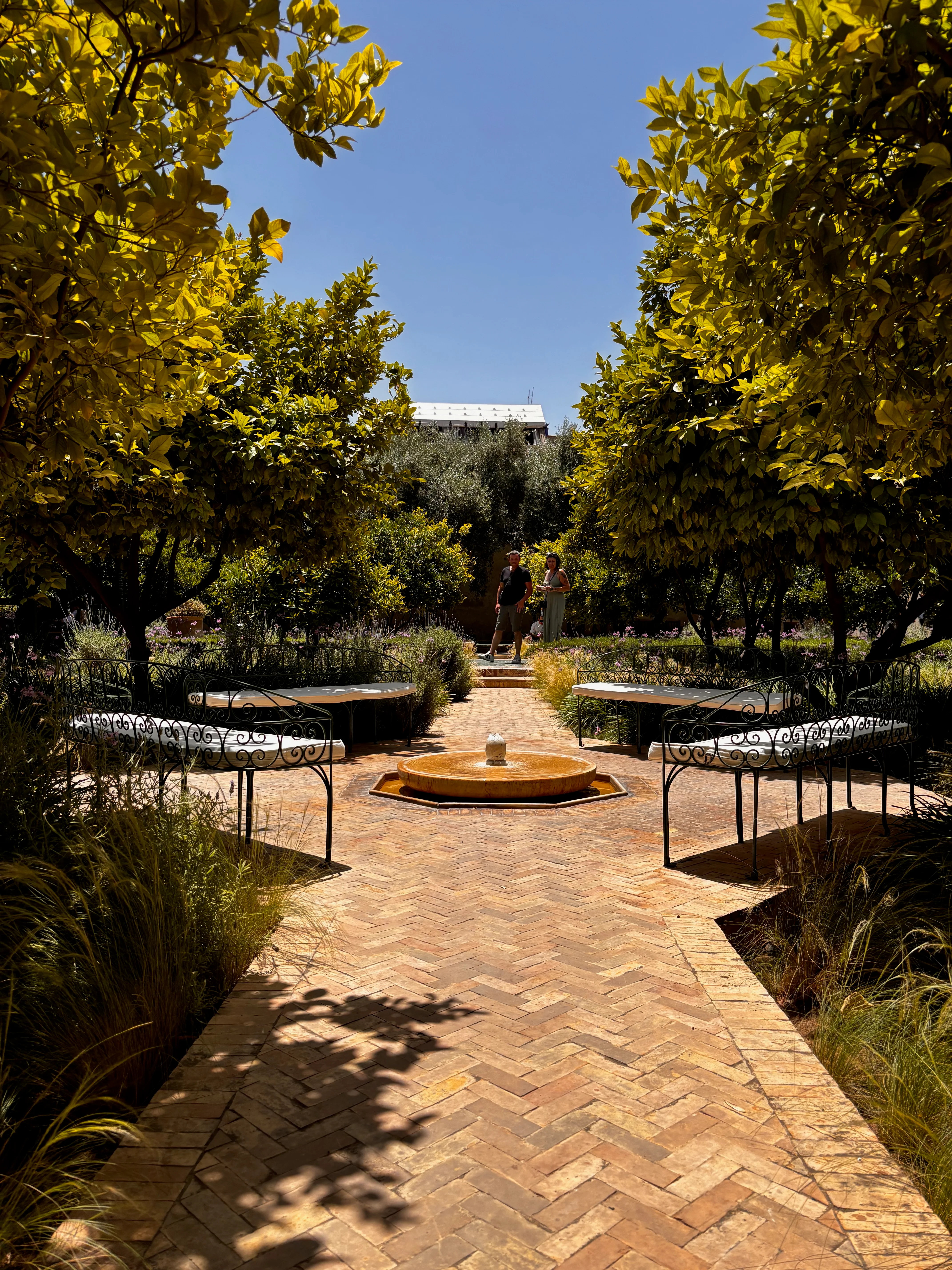 Le Jardin Secret.
Later, I visited Dar El Bacha, and this is the one I would push you towards above almost everything else in Marrakech. Each room houses Moroccan art or timeless historical pieces. The tiles pulse with colour and the rooms are beautifully maintained. There is even a coffee room and boutique dedicated to reviving the legendary 1910s Moroccan coffee culture. It gets busy, so be prepared to wait.
On the walk back to the Riad, I cut through the Souks, the vibrant open-air marketplaces where vendors compete loudly for your attention. A particular highlight was passing through the Copper Souk. If you suffer from claustrophobia, the narrower streets can feel intense.
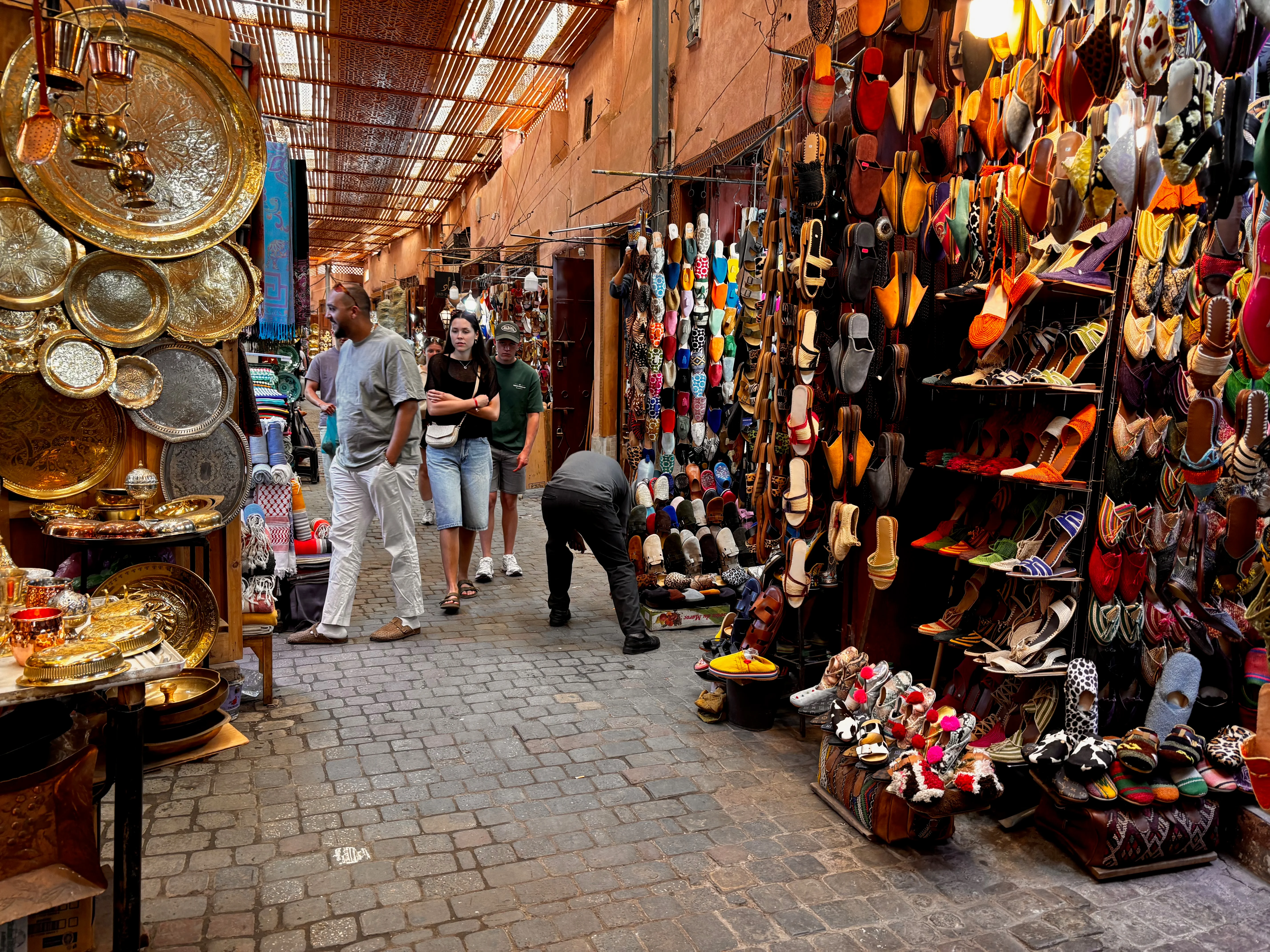
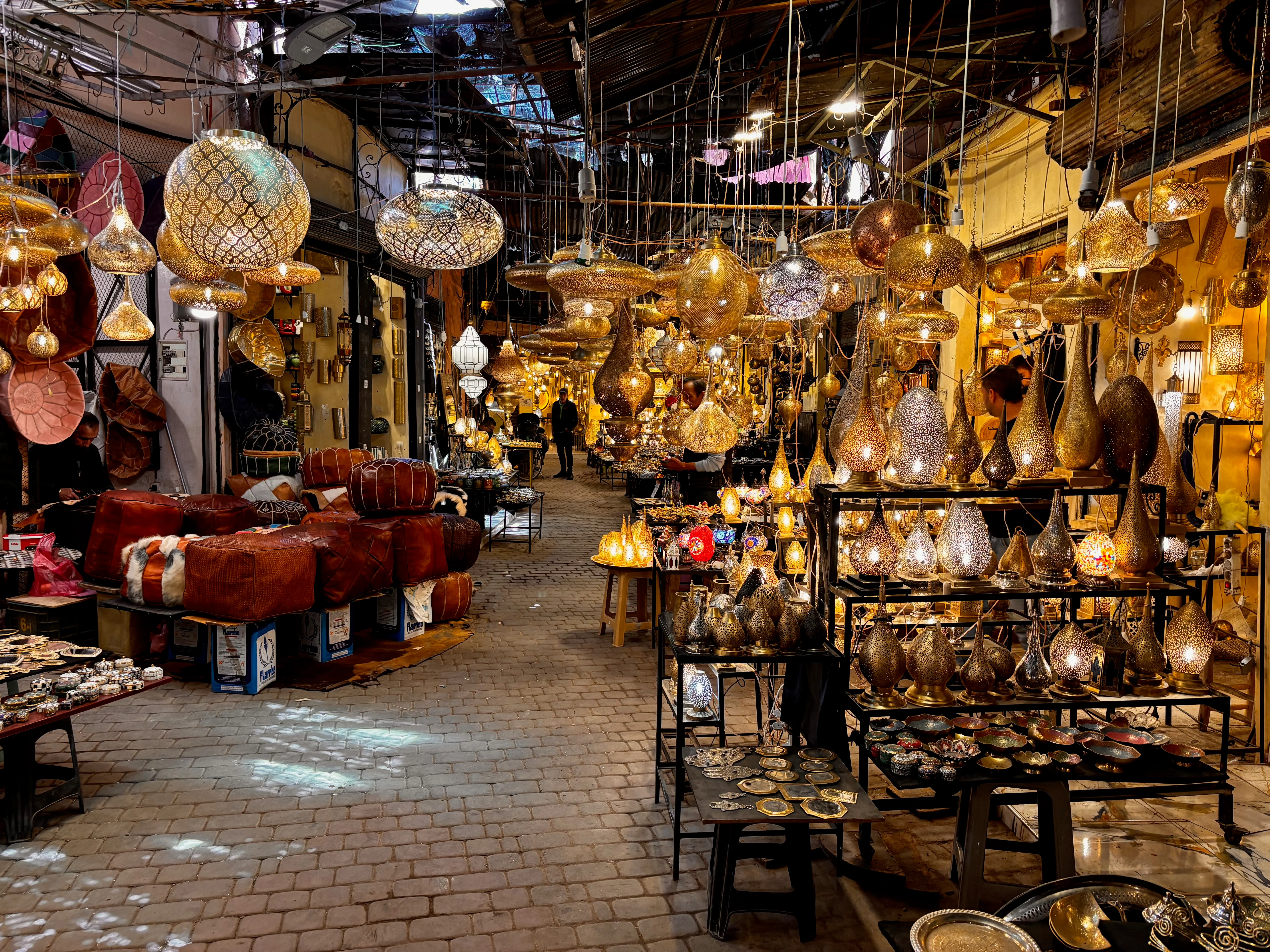
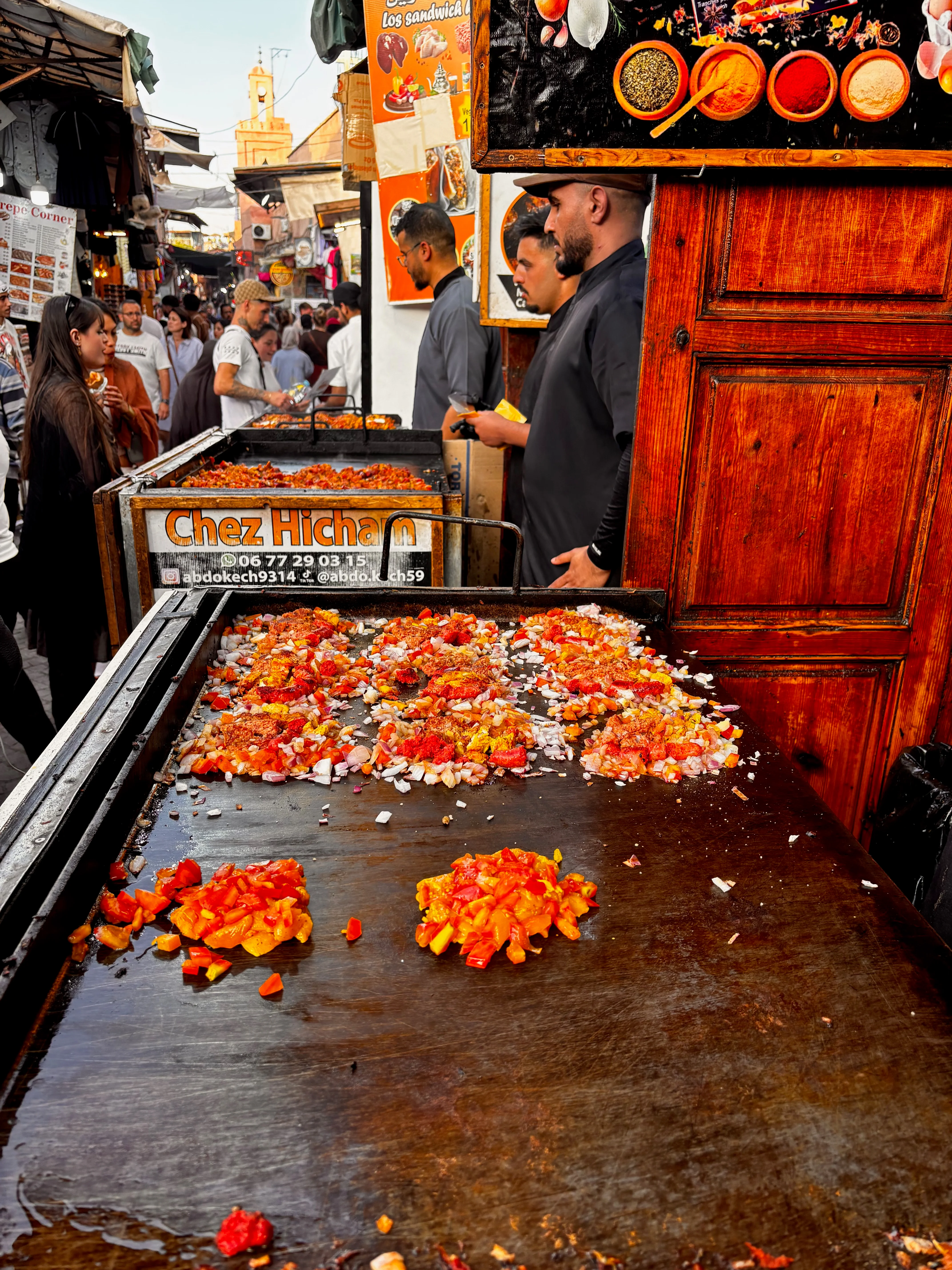
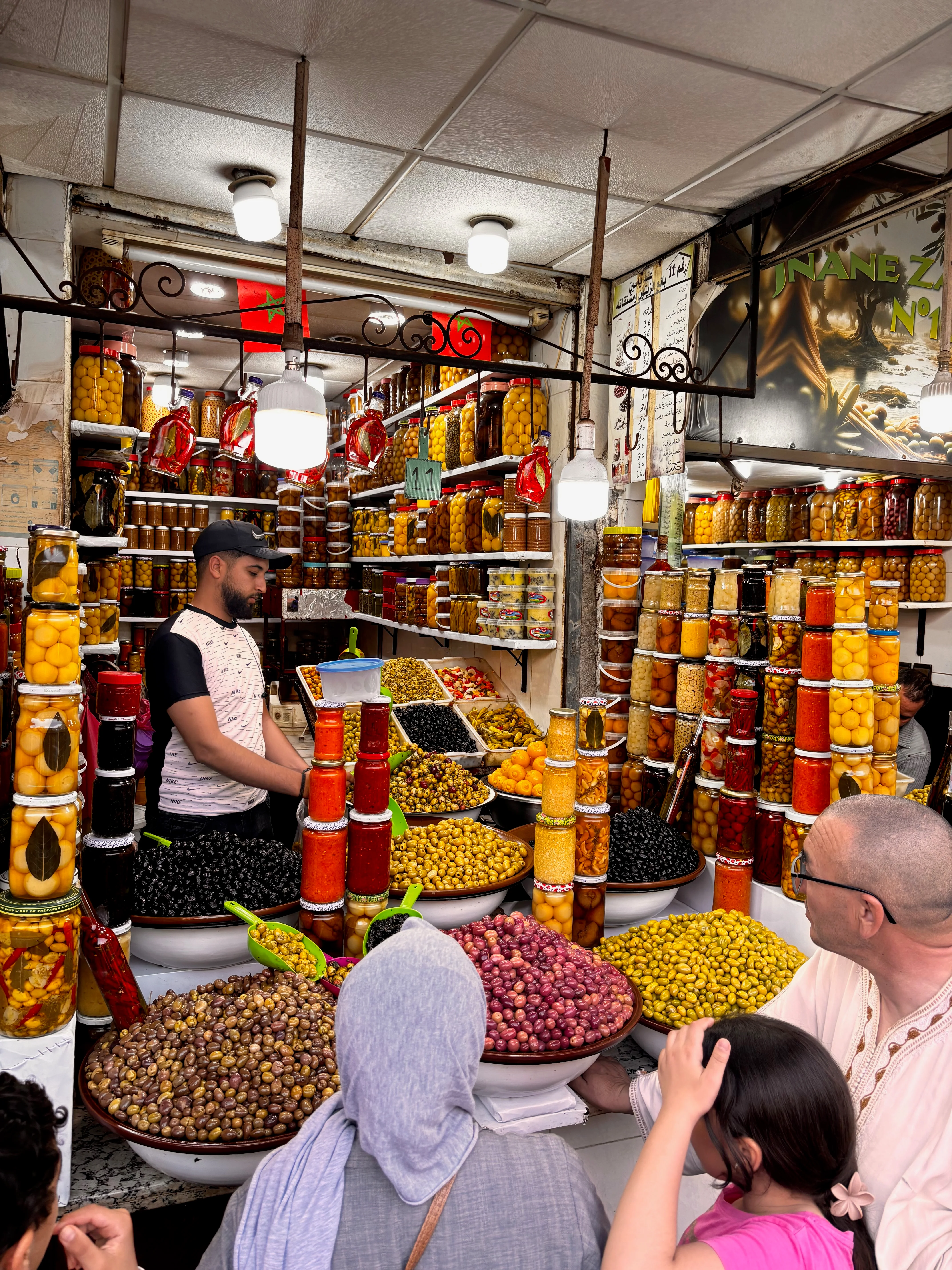
In the evening, I booked a food tour through GetYourGuide. Starting at 5:30pm meant sweating through the late afternoon sun, but it was well worth it. Here is what we worked through across the evening:
- Msemen and Harcha — Moroccan pancakes, one spiced, one tasting of nutmeg and honey
- Harira — a famous vegetarian Moroccan soup, similar to minestrone, served with dates Ours was made by Fatima, a local institution on the corner of Rue El Moustchfa
- Chebakiya — sweet pastries
- Khoudenjal — hot herbal infusions, including one containing menthol that tasted of Vicks but left my sinuses completely clear
- Khobzaa (Magic Bread) — bread with eggs and vegetables
- Olives — every variety imaginable, all fresh and vibrant
- Chwa — grilled chicken filled with onions, cheese and tomatoes.
- Berbouche — snail soup. Tasted like mushroom.
- Sardil Mechoui — fried sardines over coals, with a lentil and tomato side that elevated the whole thing. Superb
- Maklla — the Moroccan shakshuka
- Assir — fresh fruit juice
- Nuts — sweet and savoury, an assortment of everything
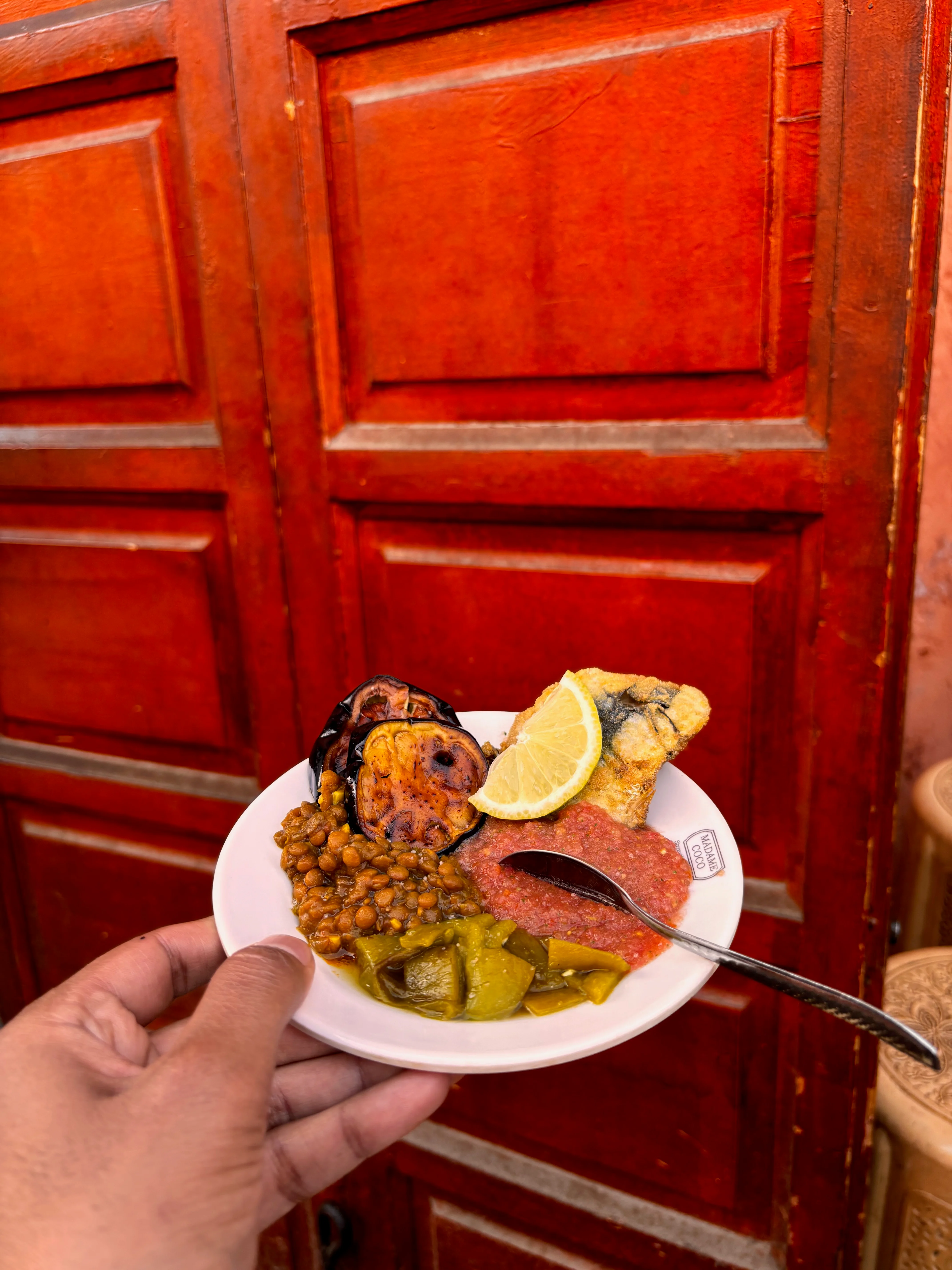
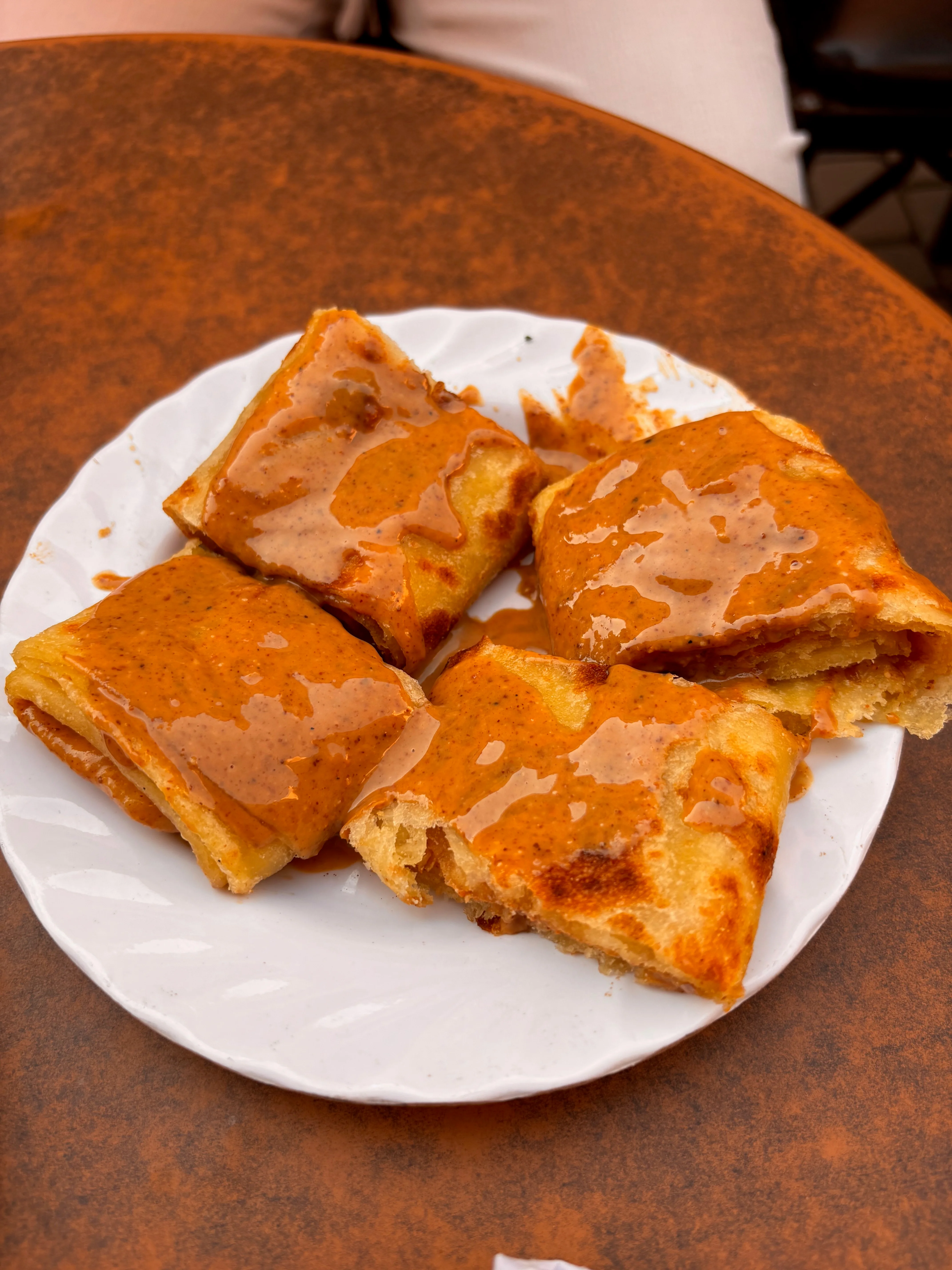
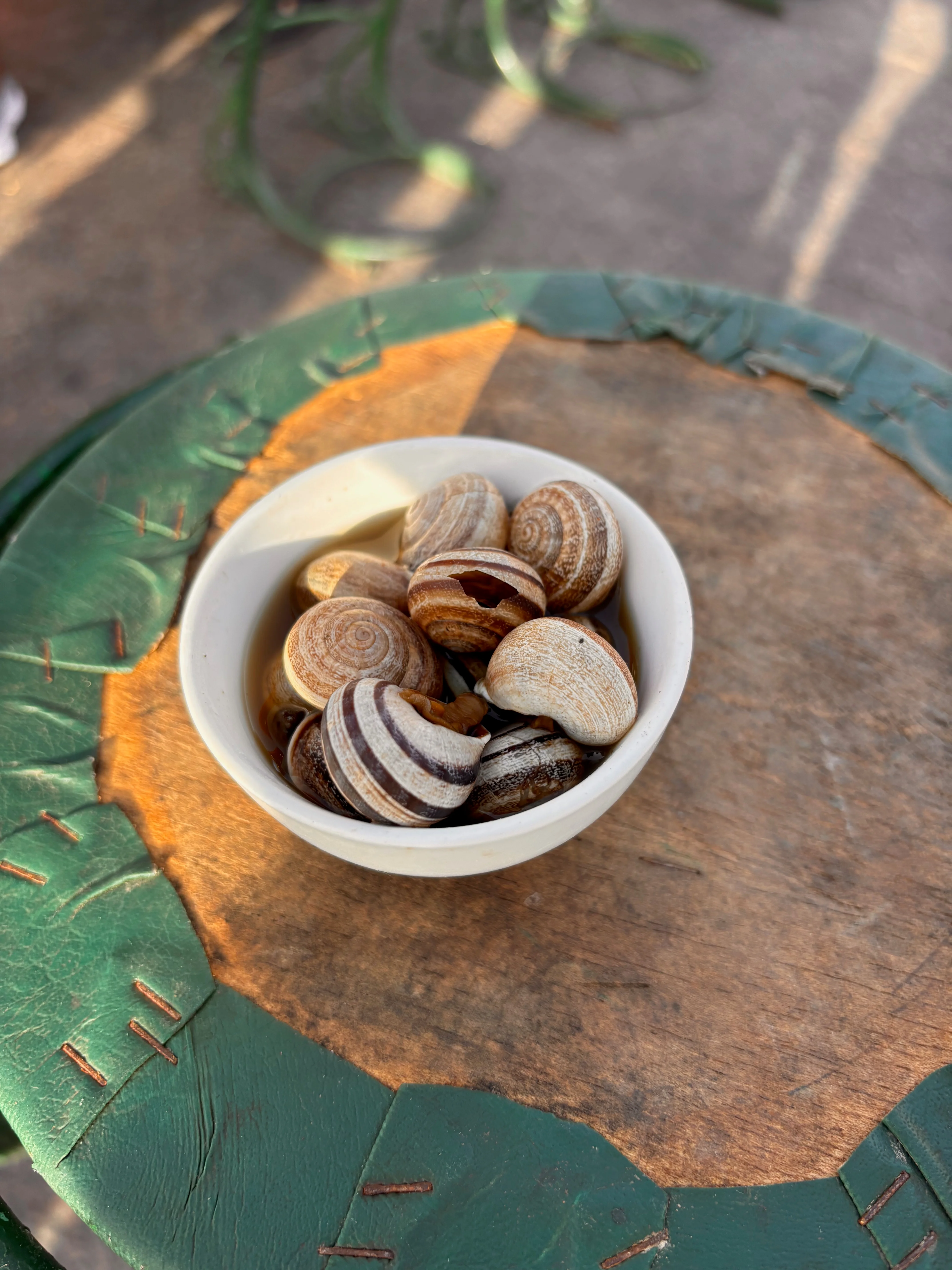
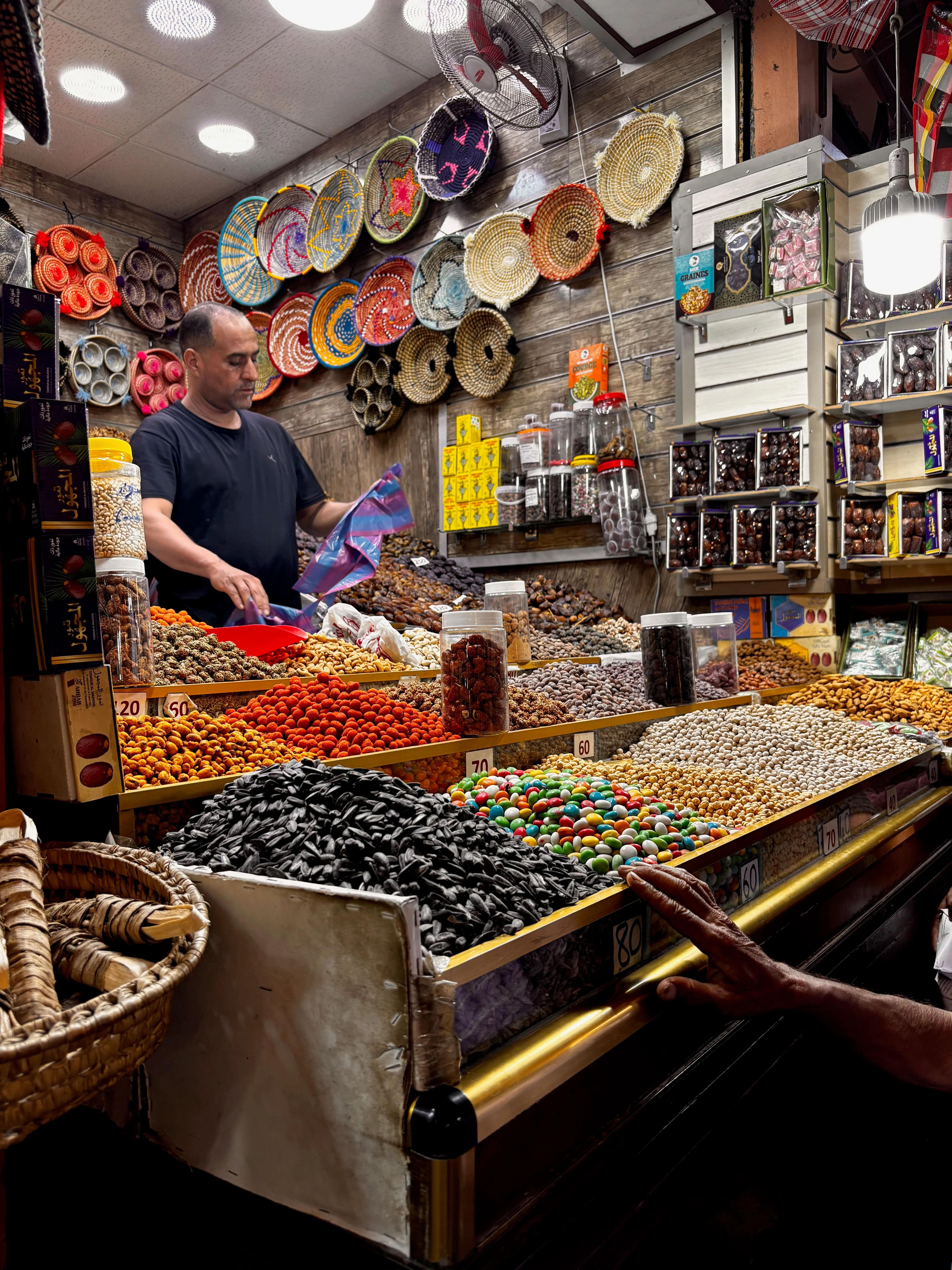
Day 3: Ben Youssef Madrasa, Maison de la Photographie, a Hammam and Jazz at Le Bistro Arabe
Another brilliant Riad breakfast: today came with a pistachio yoghurt drink. Absolutely divine.
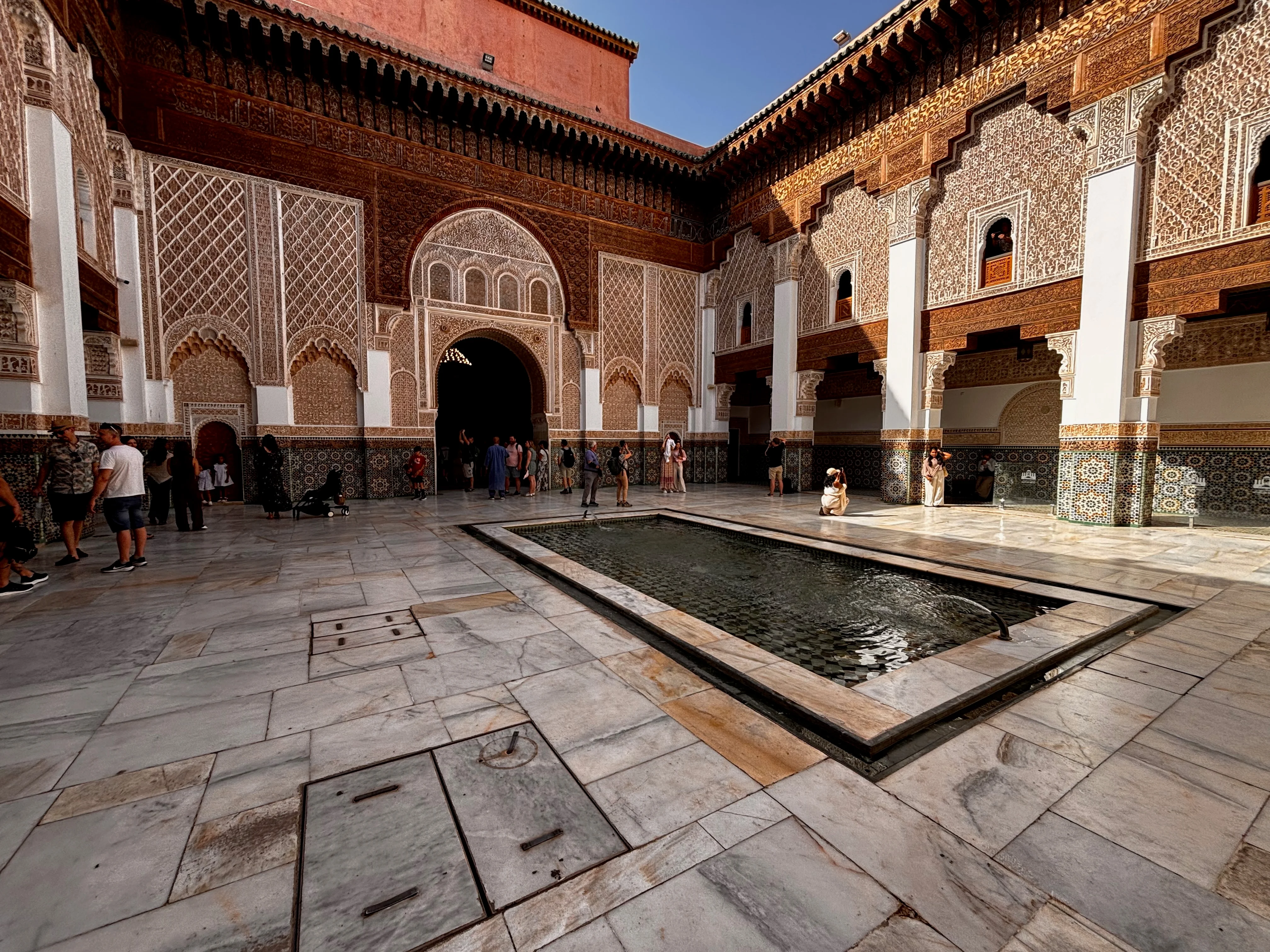
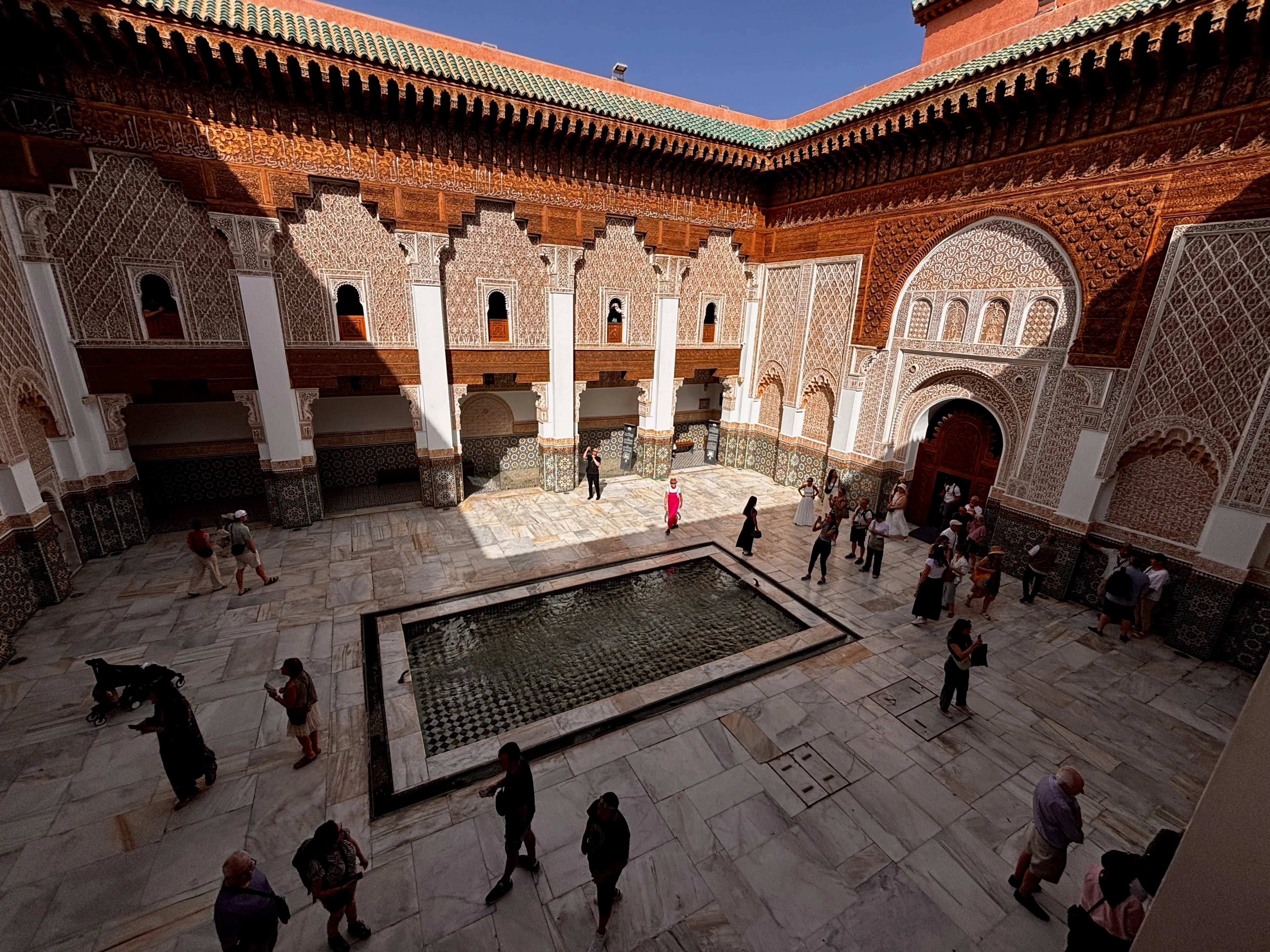
I started at Ben Youssef Madrasa, a historic centre of Islamic learning with stunning architecture. I particularly loved looking down into the central courtyard from where students once lived above. It is a compact site and thirty minutes is plenty. That is something you learn quickly in Marrakech: the sights give you a flavour of the country’s extraordinary history rather than an exhaustive tour of it.
Next, I visited Maison de la Photographie. The museum is small but the exhibitions offer a fascinating window into Morocco’s heritage. The real star is the rooftop, which delivers epic views of the city alongside a solid drinks menu. It is a perfect spot to settle in with a book for a couple of hours. Your ticket also grants entry to the Musée de la Musique nearby, where you can see and even play instruments that sit at the heart of Moroccan musical tradition. That rooftop is excellent too.
Feeling the heat catching up with me, I booked a Hammam at Isis Spa. I was scrubbed to within an inch of my life, plastered with mud, washed clean and then rubbed down with oil until my skin was practically glowing. A similar experience to a hammam I had in Istanbul, and I would do it again without hesitation.
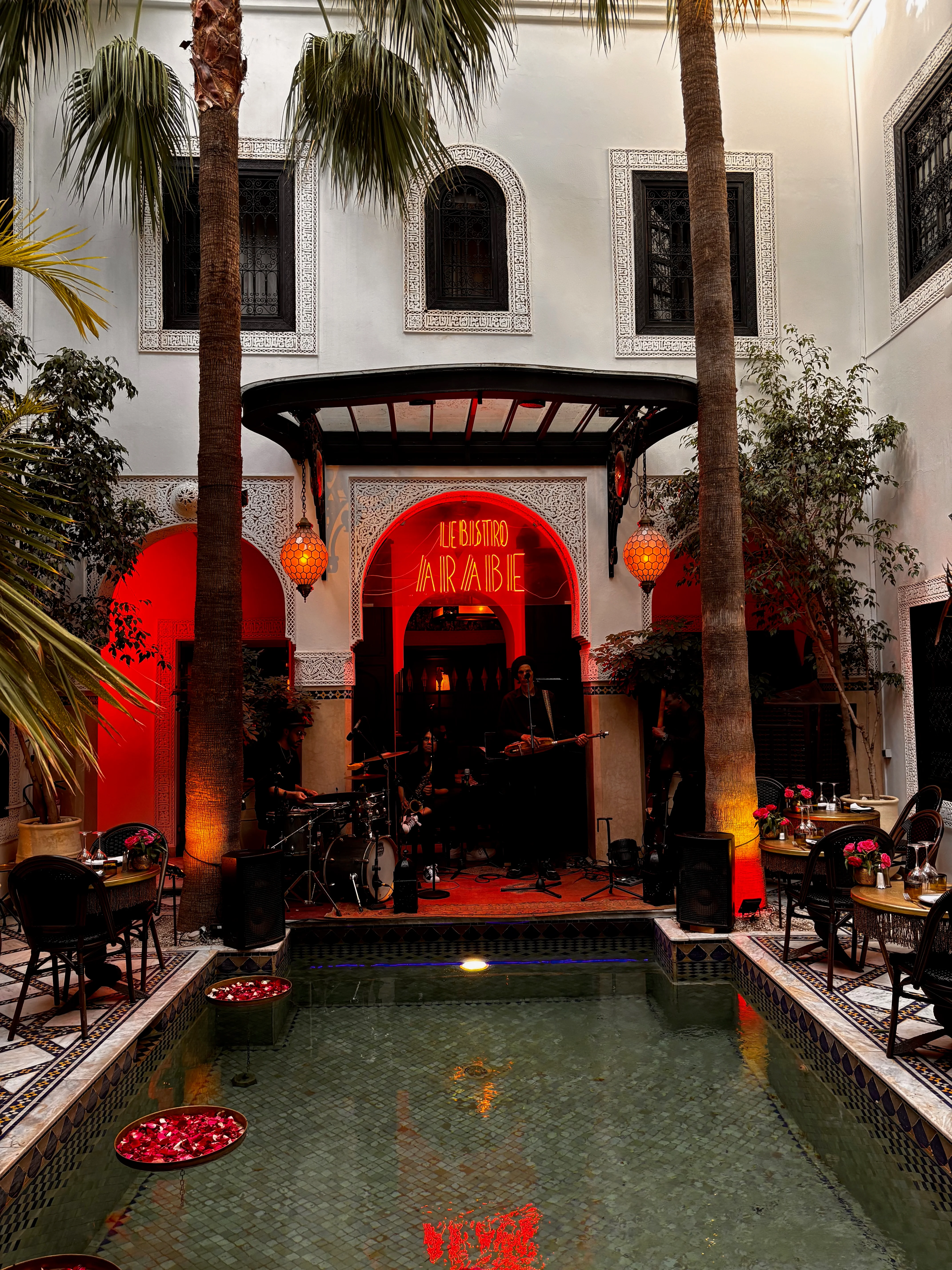
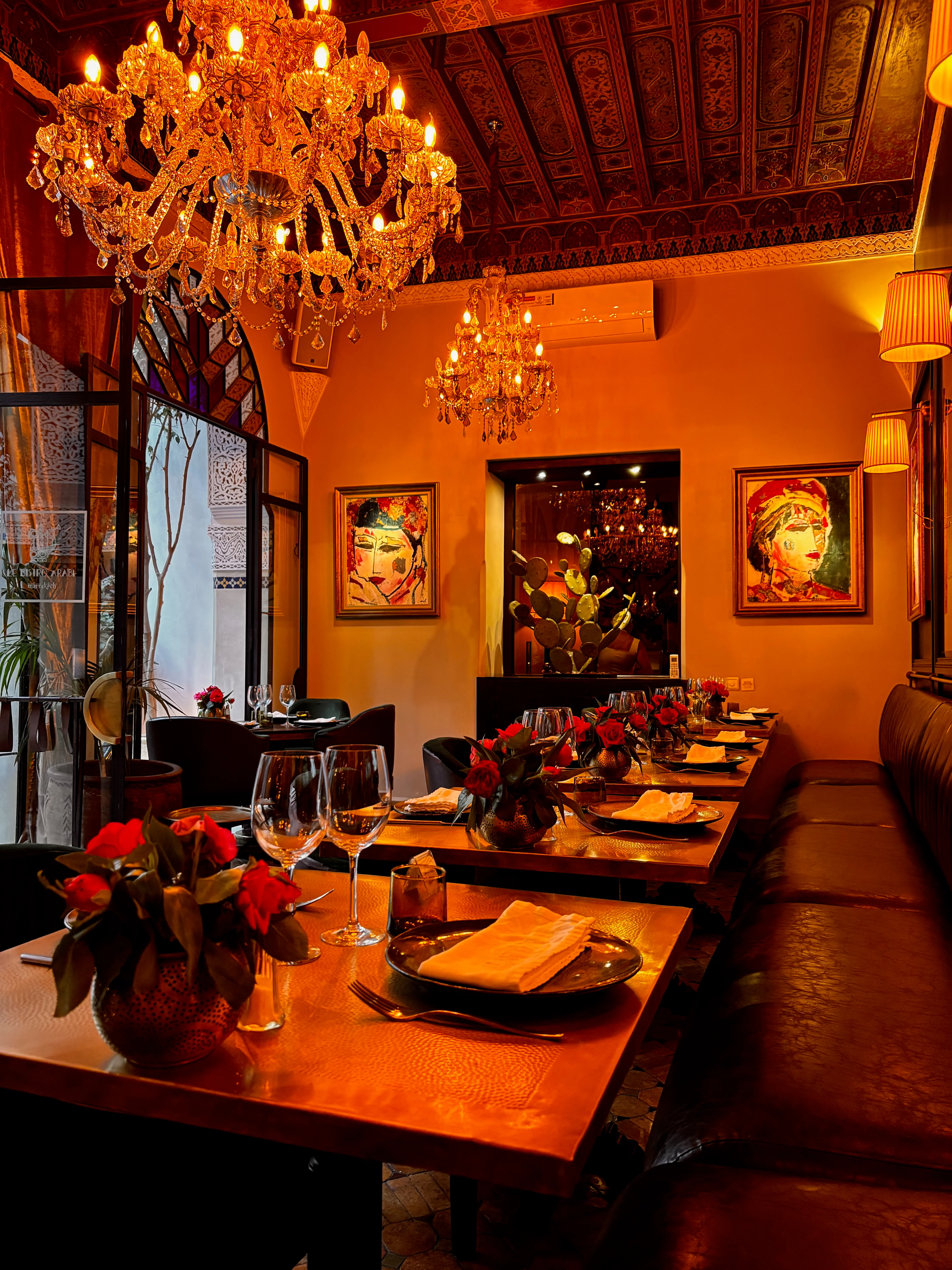
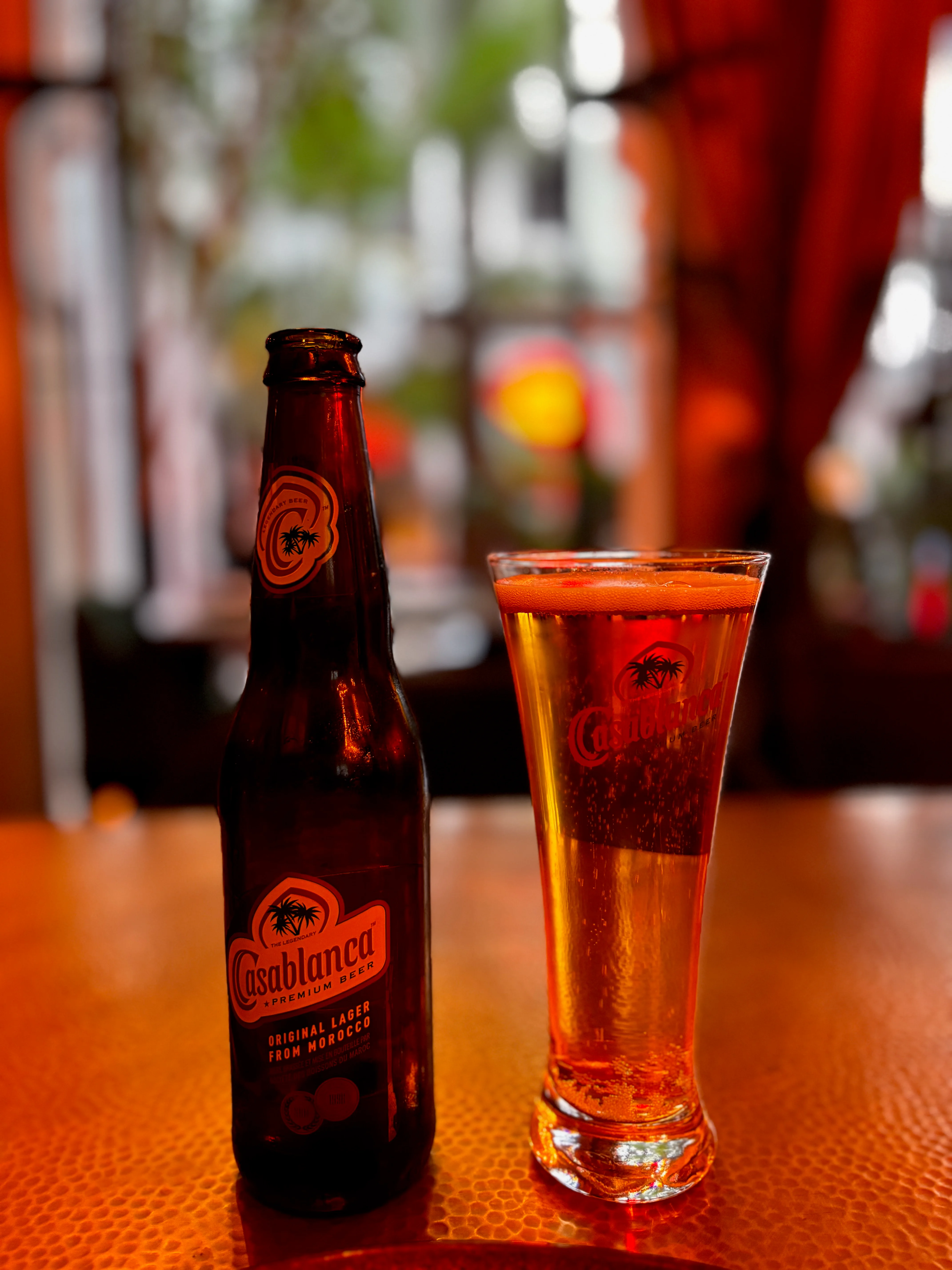
For dinner, I went to Le Bistro Arabe, a recommendation from a friend that delivered completely. It is a jazz restaurant set inside a beautiful riad, serving revisited Moroccan cuisine alongside cocktails with real personality. Listening to a live band while working through a lamb dish is a combination that never fails. Reservations are essential and it is not cheap, so bear that in mind if you are watching the budget.
Day 4: Jardin Majorelle, the Musée Yves Saint Laurent and Gueliz
I took an Uber to Jardin Majorelle. Buy your ticket in advance online, as it sells out days ahead and you cannot buy at the gate. I went for the 10am slot. The garden is wonderful. The architecture, the planting and the famous cobalt blue all work together beautifully. The only real flaw is the sheer number of people. Get the combined ticket to access the Berber Museum inside the garden, which gives real insight into a culture that many visitors know little about.
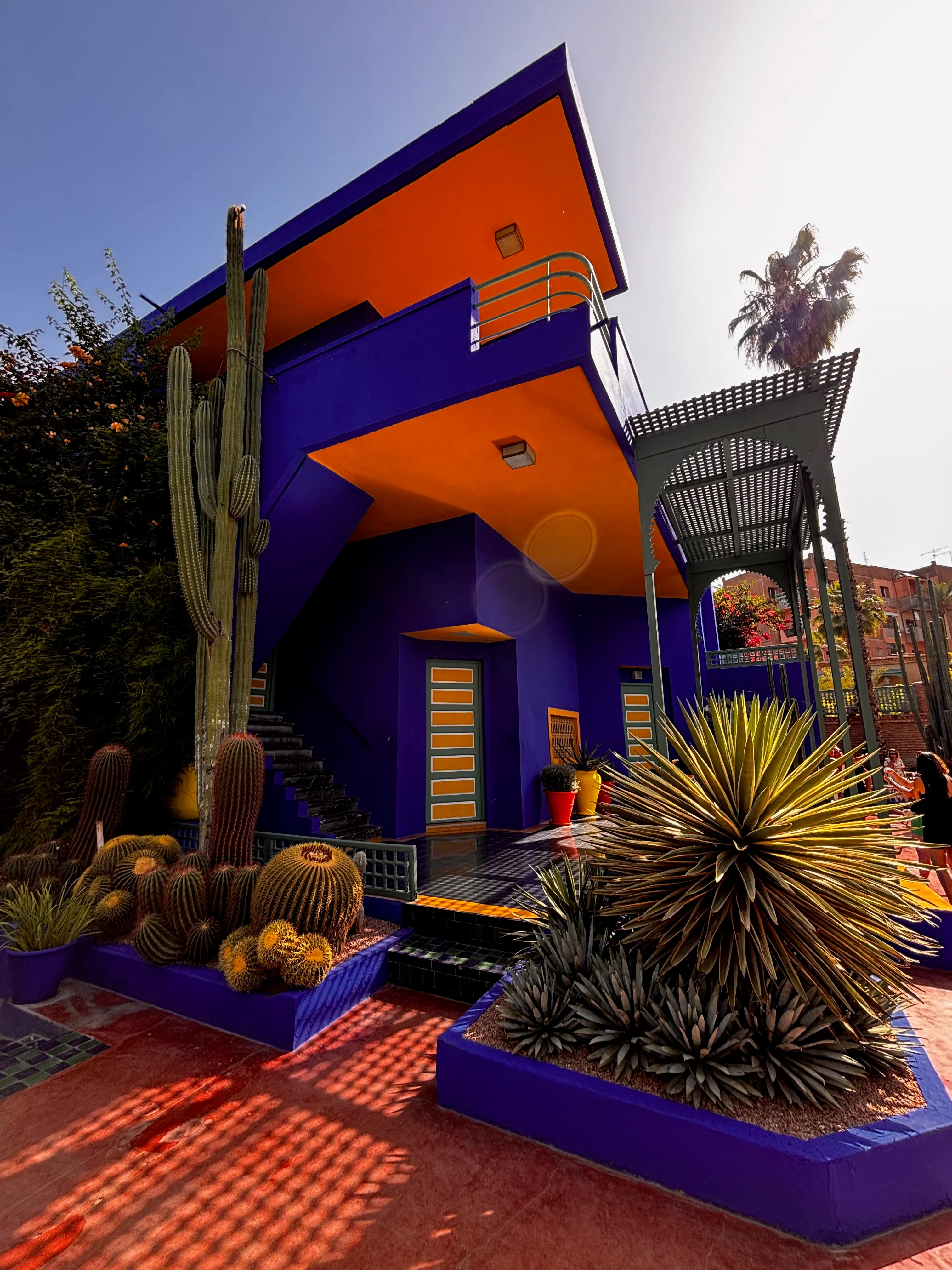 Jardin Majorelle.
Nearby is the Musée Yves Saint Laurent. The building is striking and the exhibitions provide a compelling look at a true fashion auteur. The café is a great spot for a coffee.
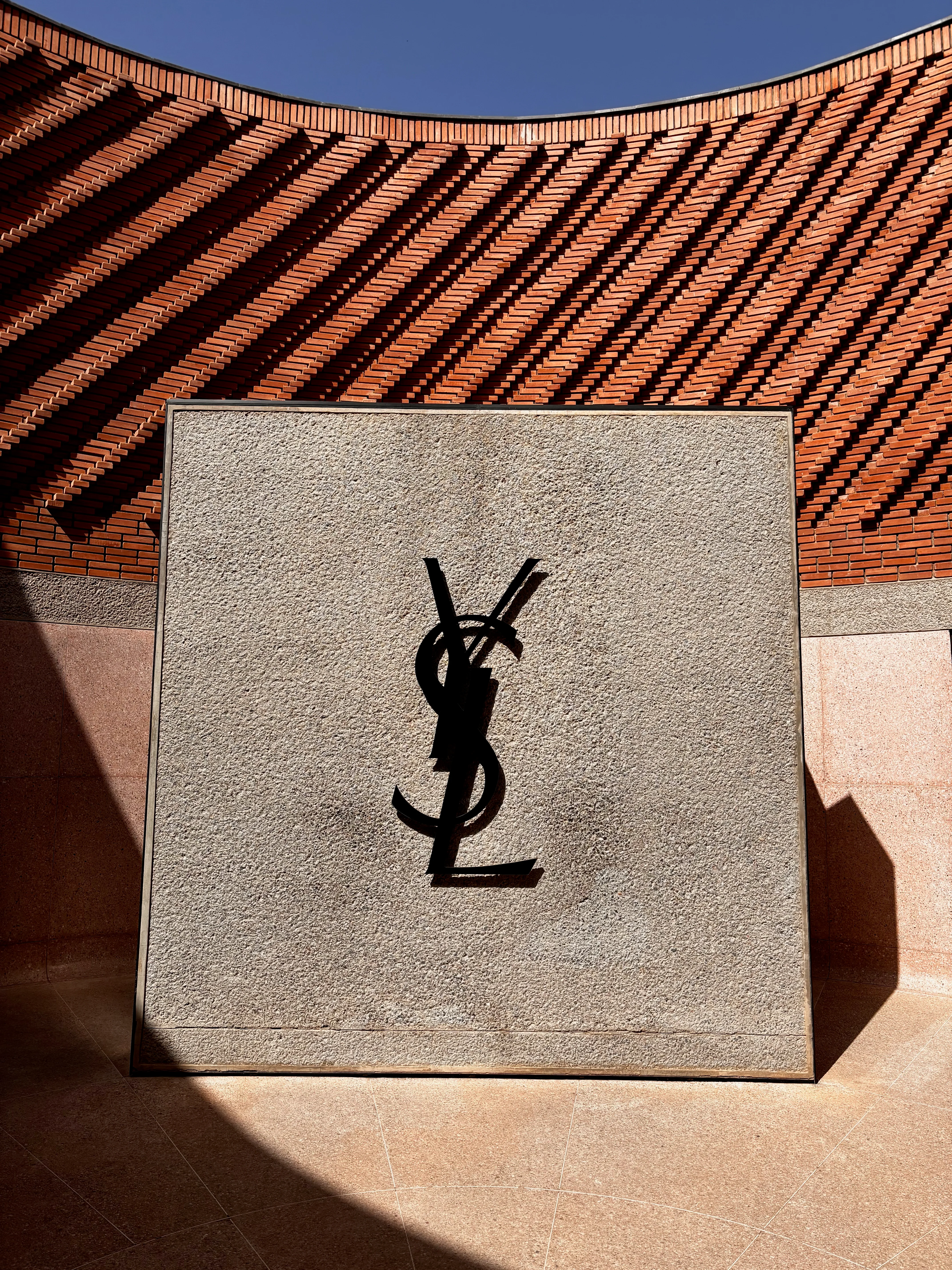 Musée Yves Saint Laurent.
Top Tip: Book Jardin Majorelle tickets well in advance. They sell out days ahead and there is no buying on the door.
Afterwards, I walked to Gueliz, the modern quarter of Marrakech where you will find familiar high street names alongside independent art spaces. My favourite was Comptoir des Mines Galerie, a contemporary African and Moroccan art gallery housed in a beautiful Art Deco building.
Day 5: Marrakech to Kasbah Ait Ben Haddou and the Dades Valley
The Sahara Desert had been on my list for years. A three-day tour from Marrakech to Merzouga felt like the right way to do it: a guided trip through the High Atlas Mountains, past one of the most filmed kasbahs in the world, through towering gorges and out into the vast, golden silence of the Erg Chebbi dunes. It is long, it is tiring and it is absolutely worth it.
I booked through GetYourGuide. The night before departure, I was sent a pick-up location. Staying in the Medina meant a 20-minute walk to that point at an early hour. About halfway there, my suitcase fell apart and spilled its contents across the road. Thankfully, an AirTag in my packing cube told me exactly where to run back to. Crisis averted.
The group met at the pick-up point and climbed into an air-conditioned van. We made several stops through the High Atlas Mountains, including a viewpoint near one of the passes that offered a stunning look across the landscape. Worth every minute.
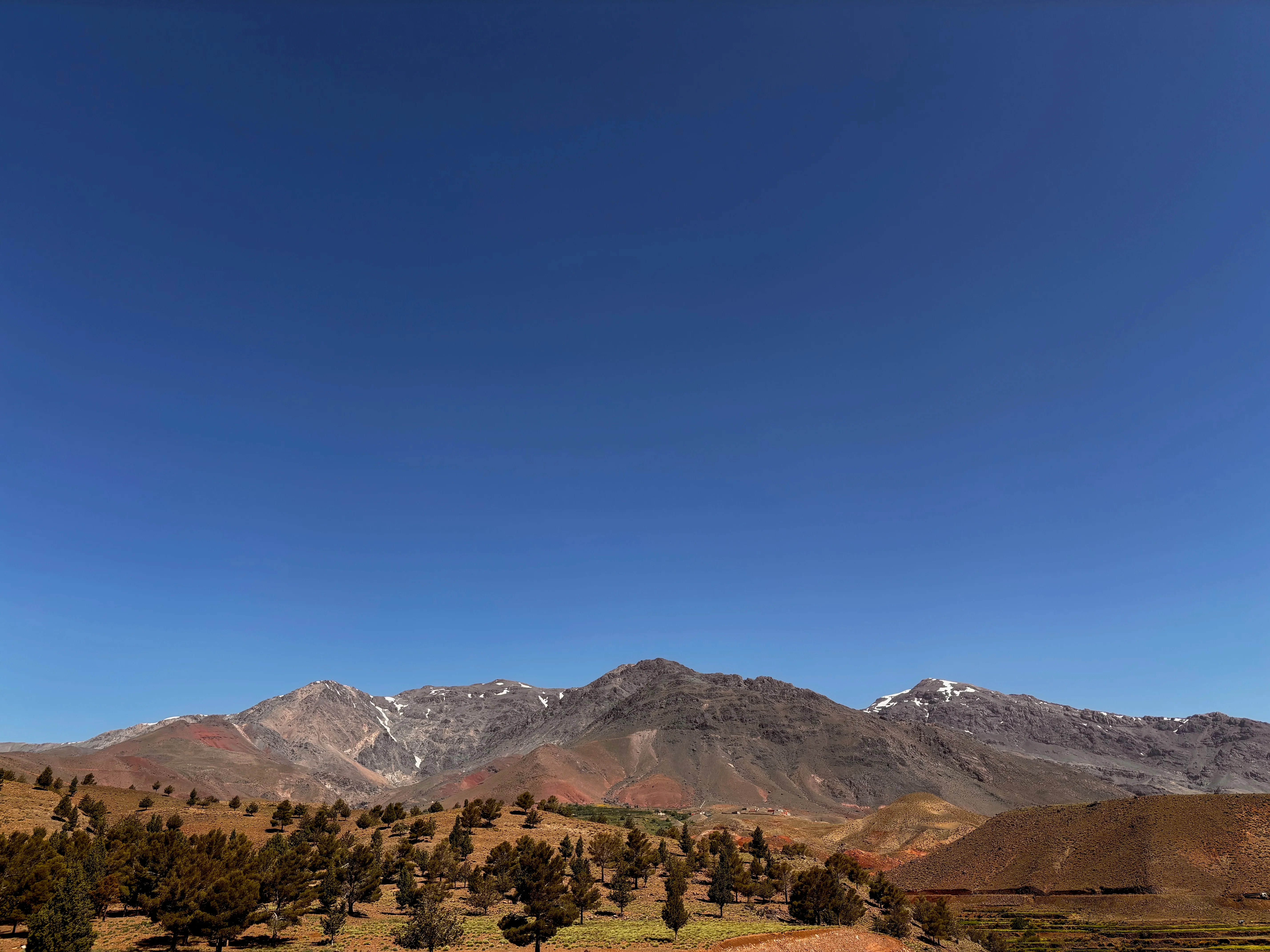 Atlas Mountains.
Our main stop was Kasbah Ait Ben Haddou, a UNESCO World Heritage Site and the fortified village used as a backdrop for films including Gladiator II. You can walk through the old village right up to the peak, where the views over the surrounding landscape are excellent. A couple of things to flag: you pay separately for lunch and for a local guide to help you navigate the site. Both feel like they should be included in the tour price rather than presented as optional extras. You are also strongly encouraged to buy a desert scarf here. They mark the price up considerably. Bring one from home or pick one up at a souk in Marrakech for a fraction of the cost.
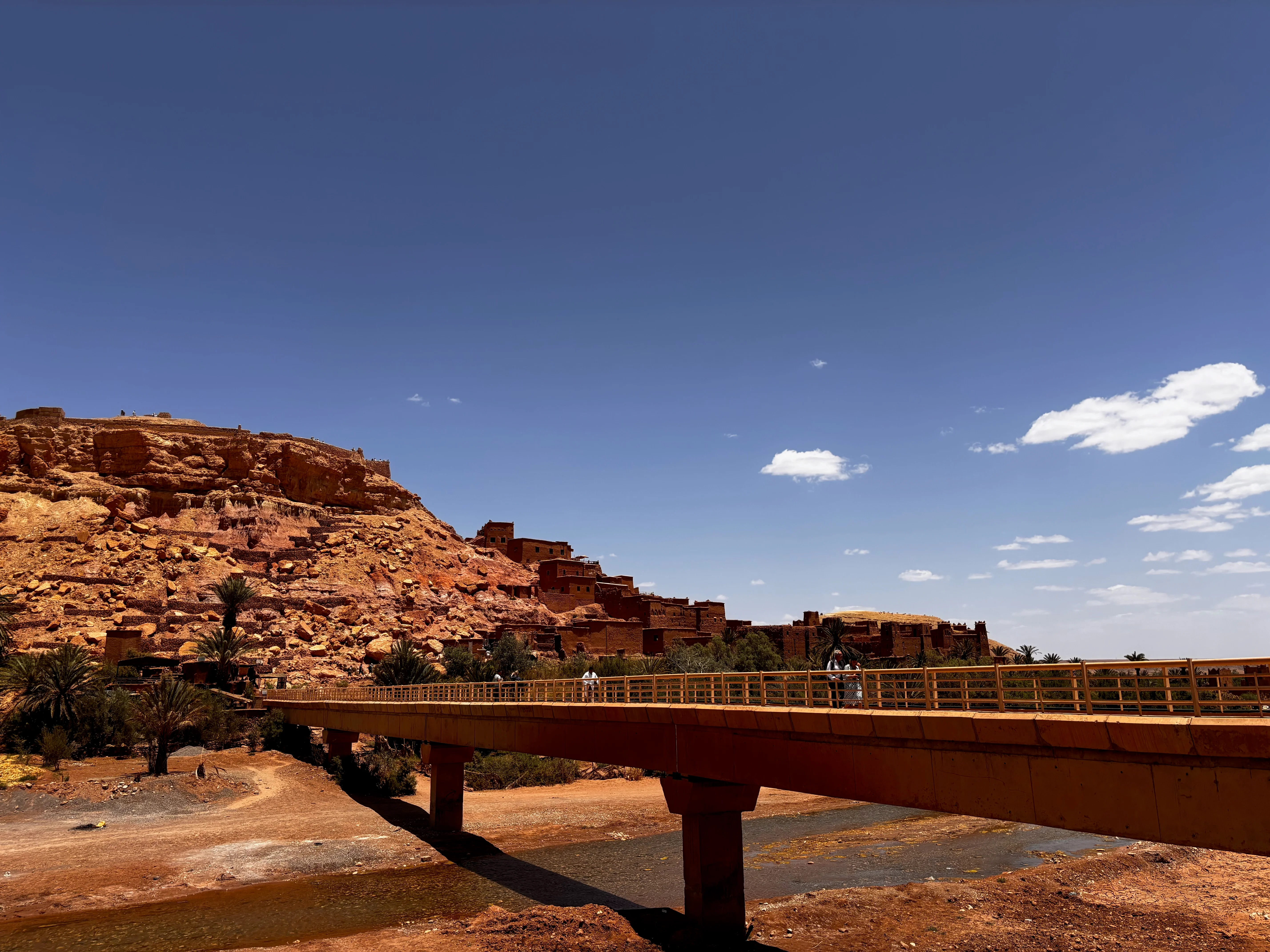 Kasbah Ait Ben Haddou.
Top Tip: Bring your own scarf for the desert. The ones on offer at tourist stops carry a significant mark-up. Buy one at a Marrakech souk before you leave.
We arrived at our hotel that evening after a very long day on the road. The room was not clean and dinner was not served until 9pm. After travelling since 7am, that was a genuine low point.
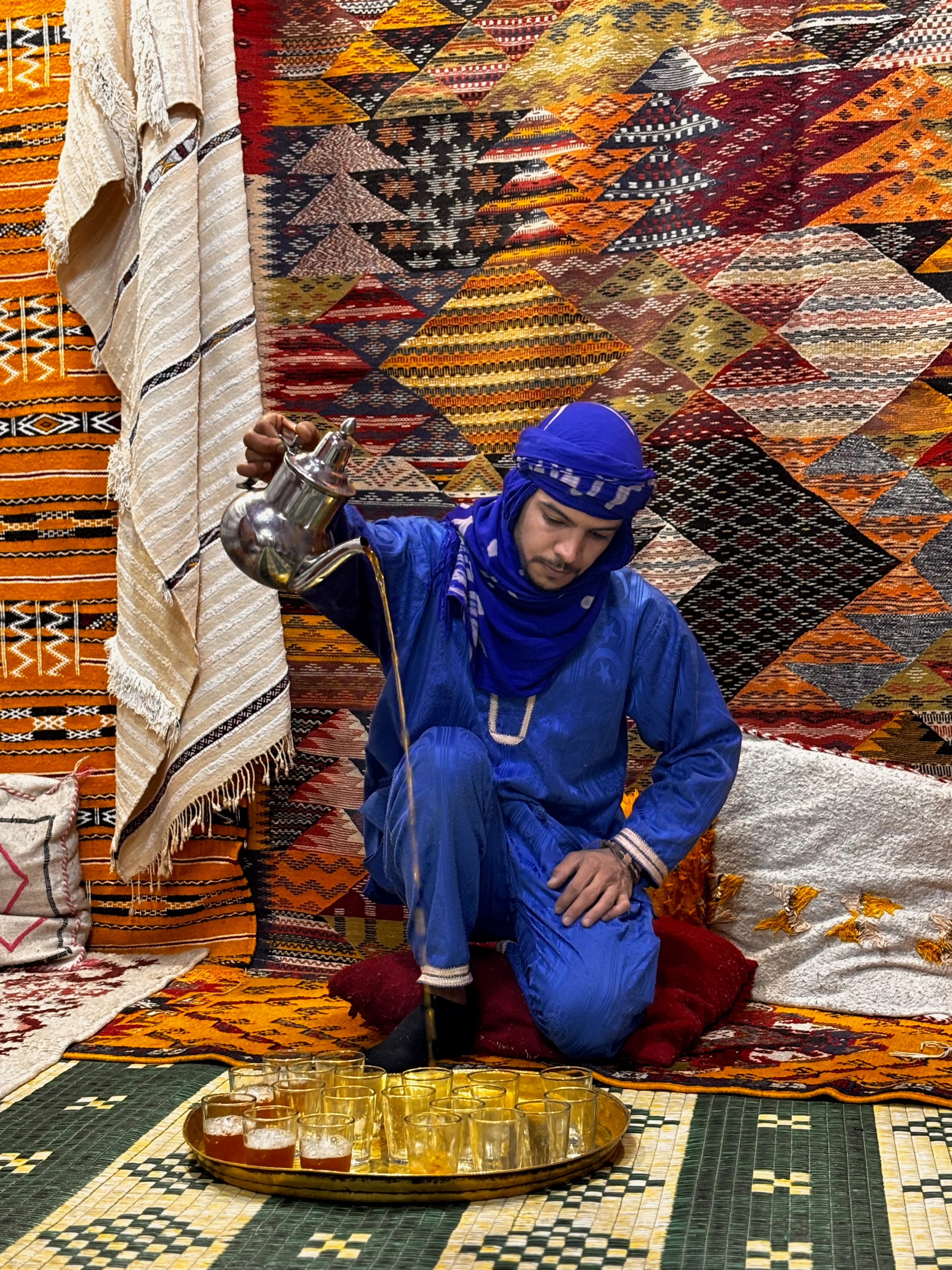 A man pouring tea.
Day 6: Todra Gorge, the Sahara Desert and a Night in a Berber Camp
Despite the previous night’s disappointment, I slept well. The first stop was Todgha Gorge. The water runs clear and the rocky walls rising sharply on either side are genuinely impressive. It is a brief stop but a striking one.
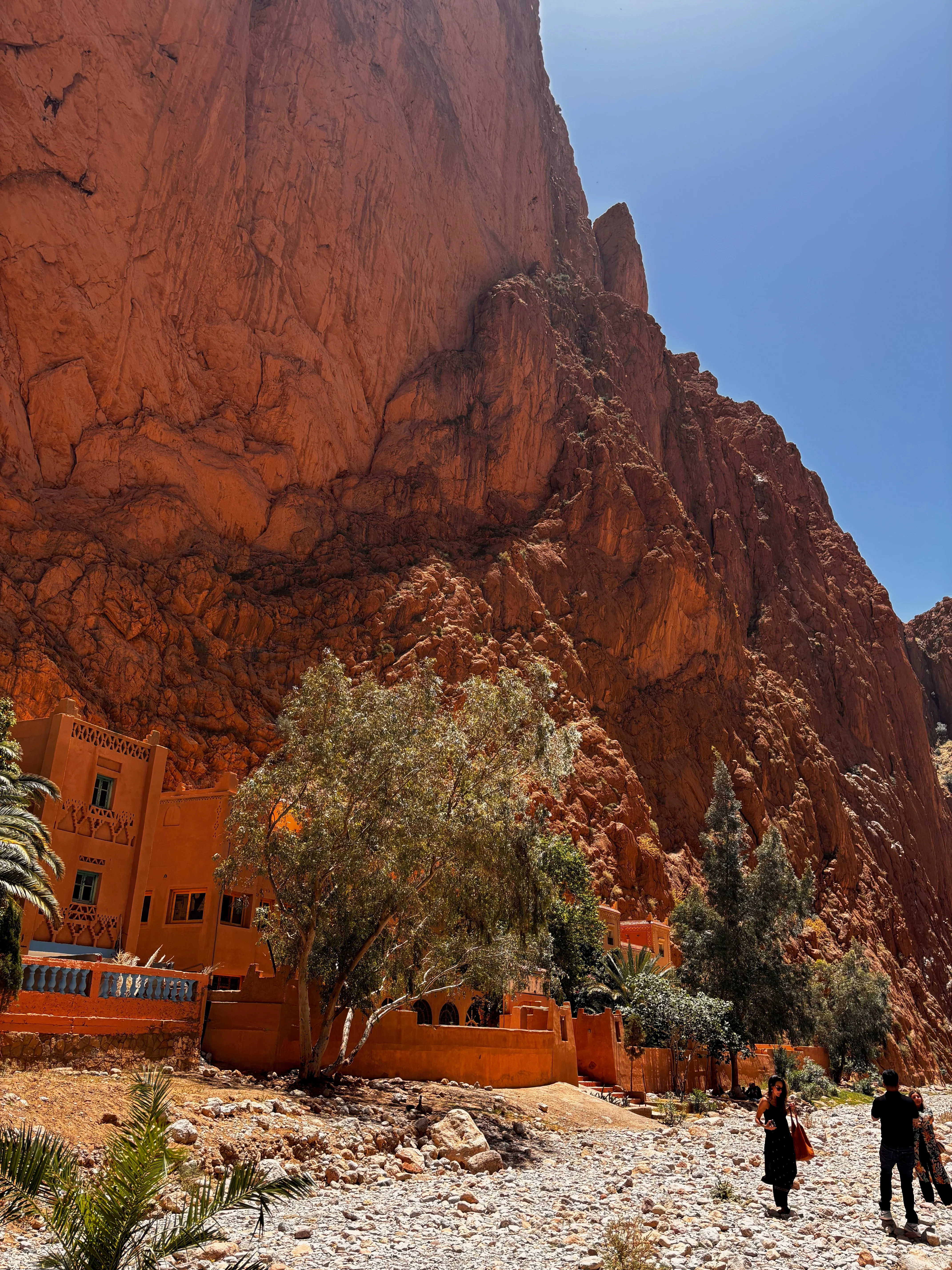
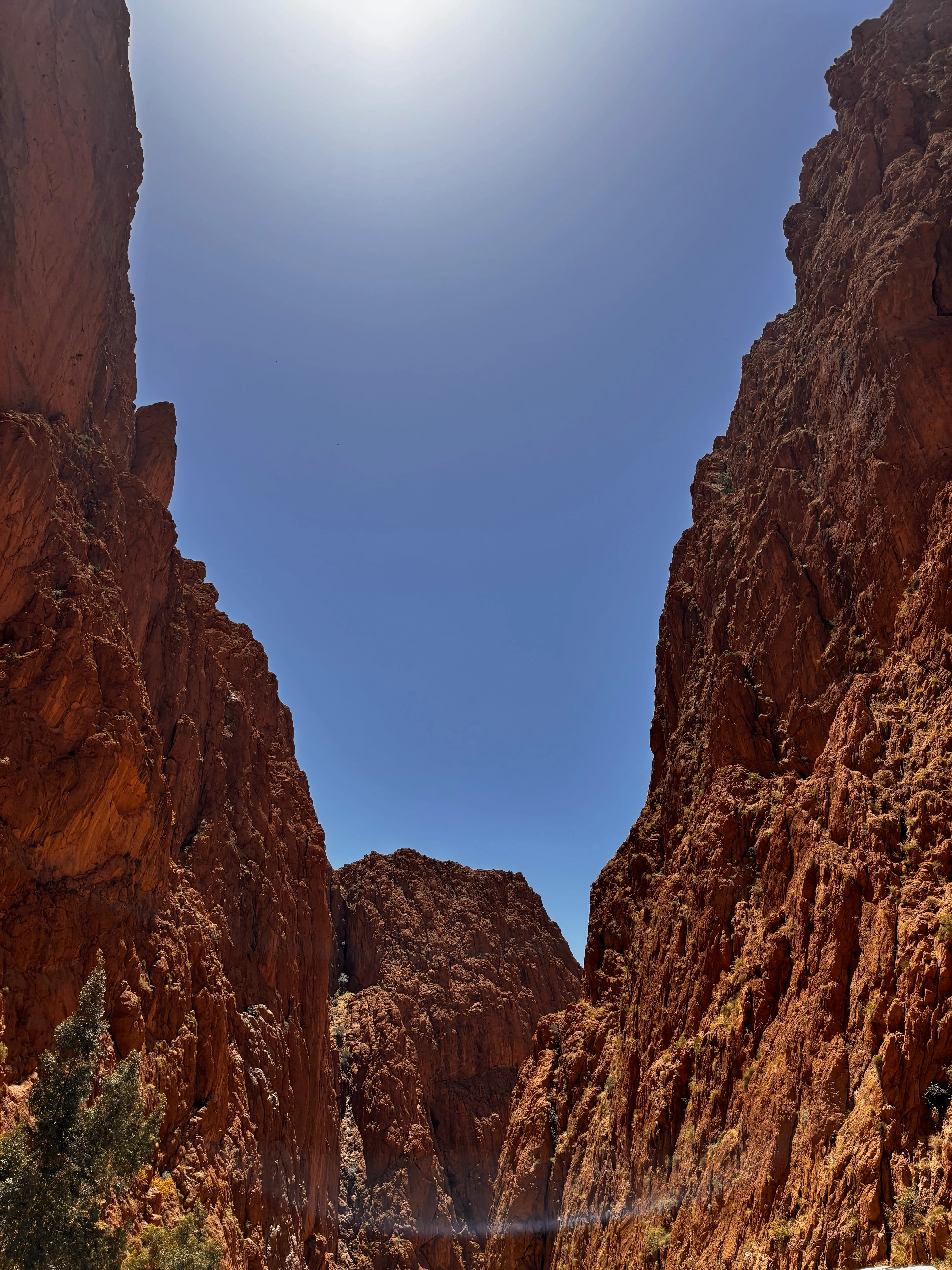
Lunch was at a buffet restaurant serving the standard fare: chicken, couscous, vegetables and fruit. The same spread would appear at almost every meal for the next few days.
Then we headed into the desert. Our destination was Erg Chebbi. Take a day bag rather than your main suitcase to the Berber camp. Our luggage was kept in the van and the day bags went ahead separately by car. Wear three-quarter shorts and comfortable footwear. You will be riding camels, and if you have never done it before, the side-to-side sway takes some getting used to. The animals are docile, though, and there is nothing to worry about. An alternative is to hire a quad bike, though at 450 to 500 MAD at time of writing, it is a pricey option.
We stopped halfway to the camp to go sandboarding and to watch the sunset. The cloud cover meant we missed the sunset itself, but rolling down the dunes more than compensated.
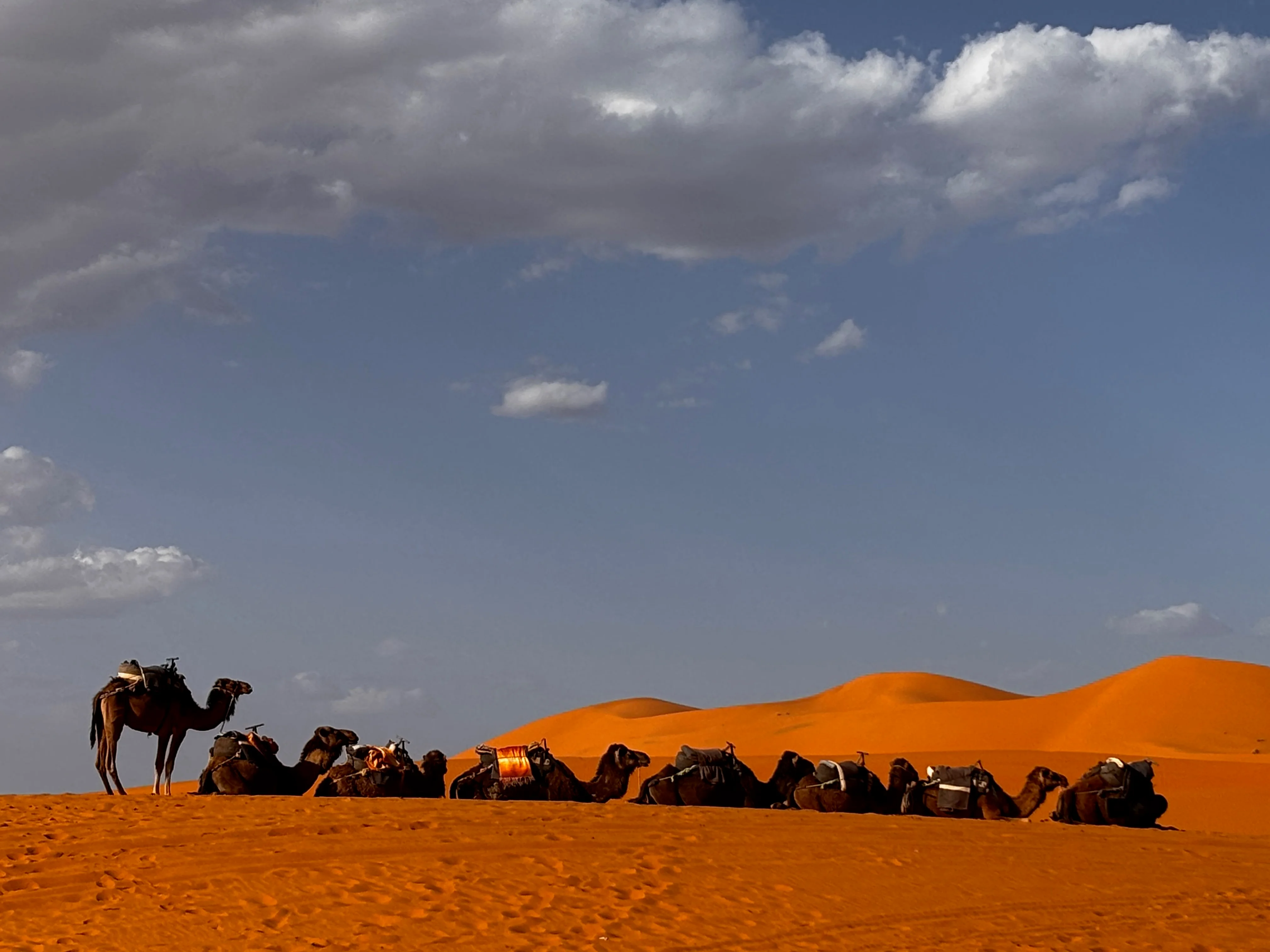
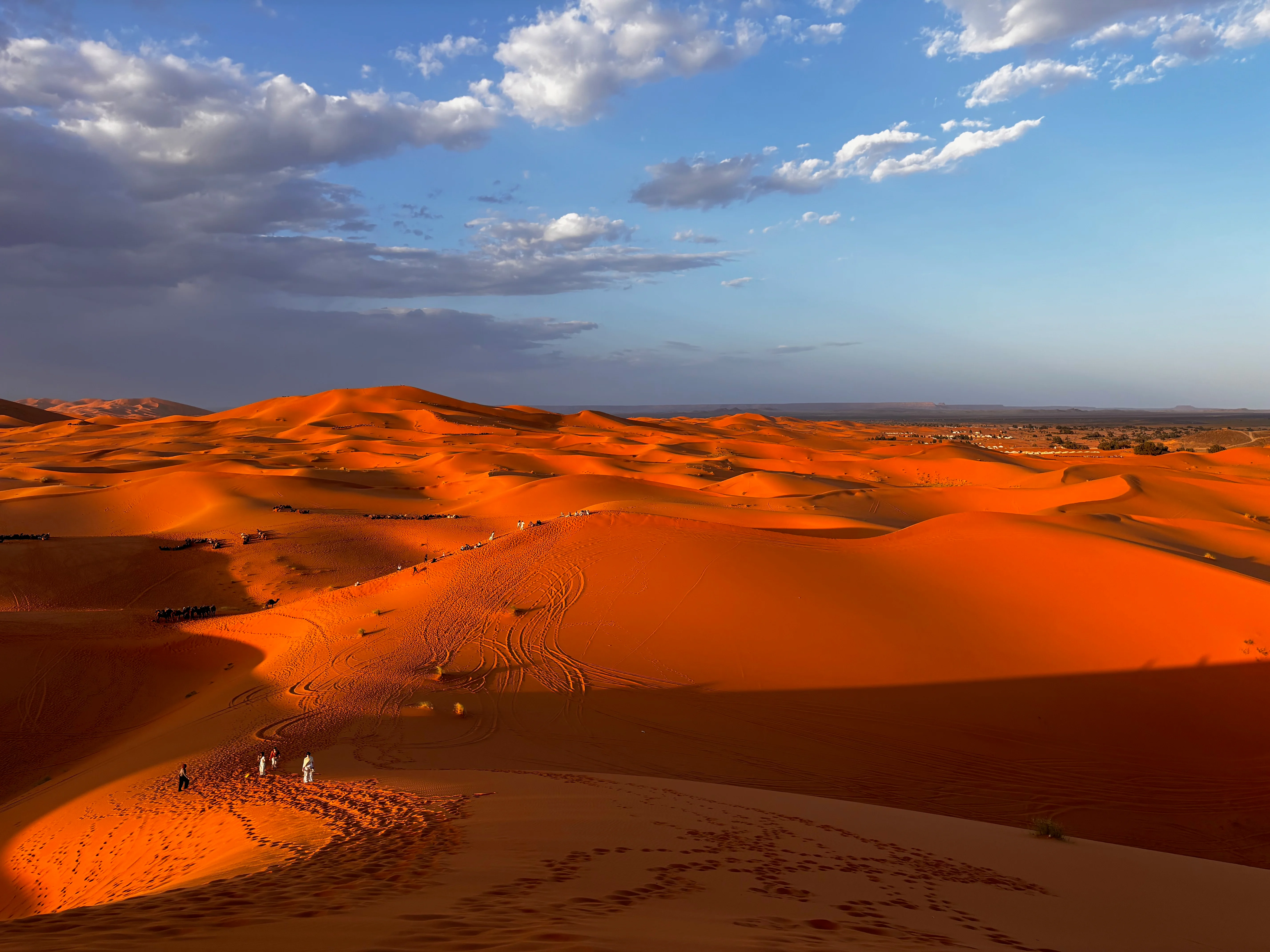
At the Berber camp, I was assigned a tent. The rooms had electricity, which surprised me, and the overall setup was considerably better than the previous night’s hotel. The heat inside the tent, however, was something else. Showers existed but the one I used had almost no water pressure.
Dinner was a buffet again. The evening ended with traditional music around a large campfire. With a clear sky overhead, there was also some brilliant stargazing before the 4am wake-up call put paid to any idea of a proper night’s sleep.
Day 7: Sunrise Over the Dunes and the Journey Back
I was up at 3:45am. I was the only one awake in the camp, which gave me time to shower and brush my teeth before the rush. It is a strange place in the early hours: the complex is bigger than you expect, more like a small village than a camp.
The stars were out in full force, and I managed some brilliant shots of the night sky before dawn.
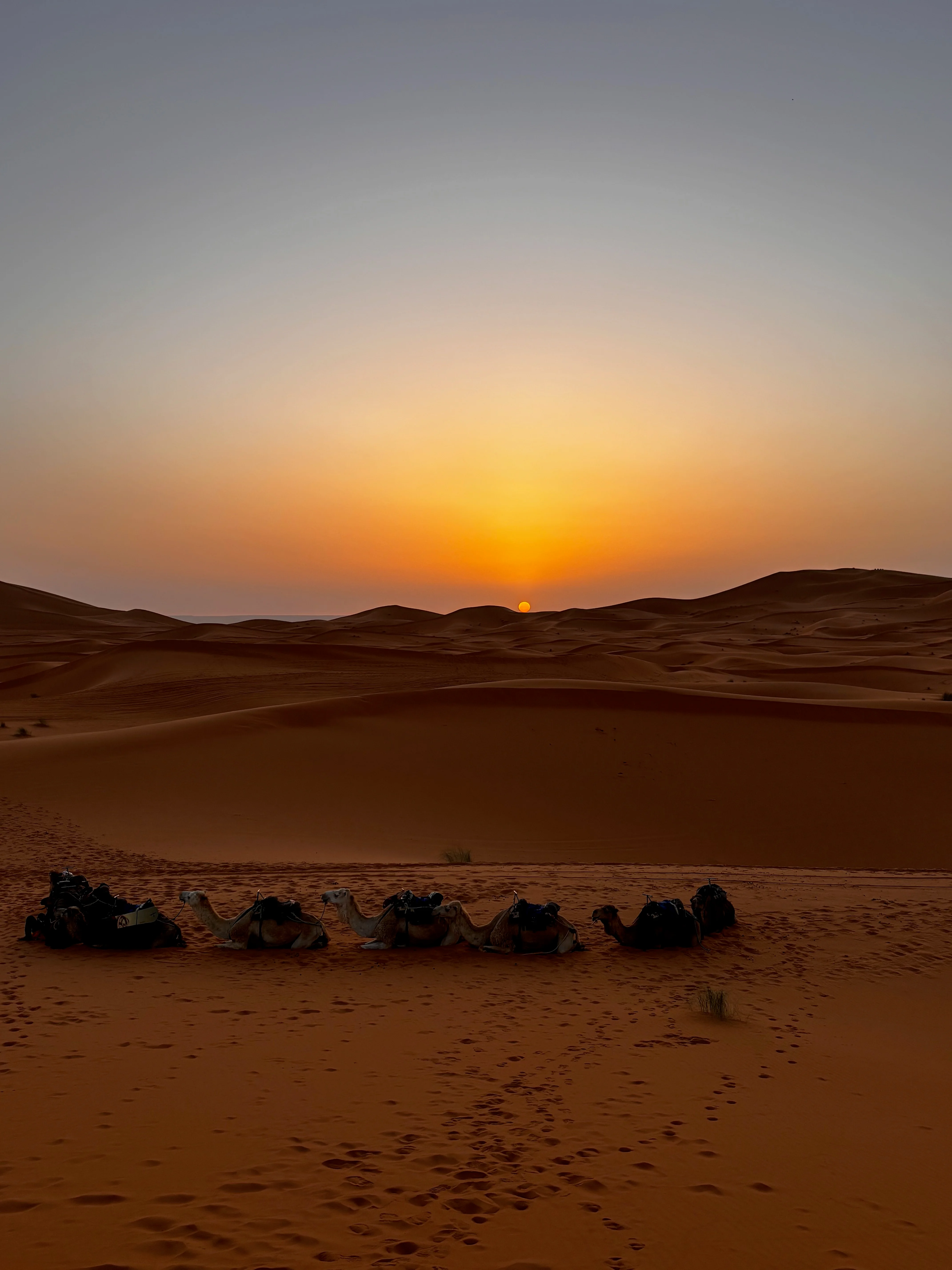
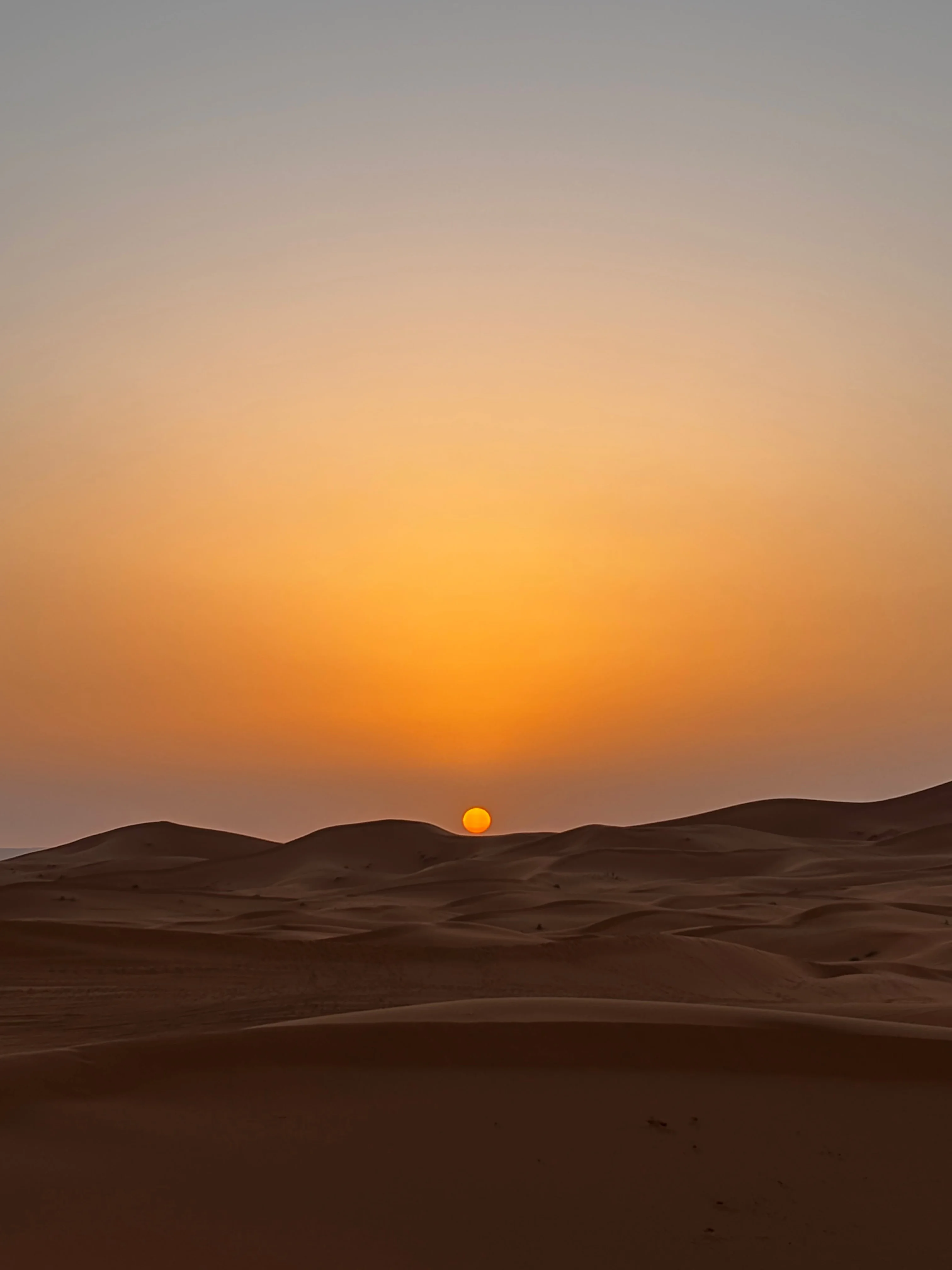
Straight after a quick breakfast, we took camels back across the dunes to catch the sunrise. The photograph I came away with — a camel silhouetted against the sun rising over the dunes — is one of the best I have ever taken. A one-in-a-million shot.
Then the long journey back to Marrakech began. We stopped several times for comfort breaks and for lunch, another buffet that was below the standard of the previous days. The highlight of the journey: finding a Kit Kat ice cream at one of the stops. It was excellent, and my ongoing quest to sample every Kit Kat variant in existence continues.
We arrived back in the Medina area around 7pm. The desert tour is tiring, occasionally frustrating and completely unforgettable. The dunes at sunrise make every early morning and long road worth it.
Accommodation:
In the evening, I stayed at Riad La Caleche. First impression: the courtyard is lovely and there is a small pool, which felt like a gift after three days in the desert. The rooms are small and nothing special, but the shower had real water pressure, which at that point was all I needed.
For dinner, I wandered to Mandala Society and ordered the Salmon Hoisin burger. It was not bad at all and made a welcome change from the meals of the previous few days.
Day 8: A Final Hammam, Lunch and the Journey Home
I booked a Hammam through GetYourGuide, which I would not do again. The meeting point pin was in the wrong location, the massage was cut short, and the whole experience felt like poor value. My advice: book directly with a hammam rather than going through a third-party platform.
For lunch, I have two recommendations depending on your mood. Head to La Familia for fresh, homemade vegetarian food, or Naranj if you are after Lebanese food and tasty wraps. After lunch, I grabbed my bags, booked an Uber to the airport and said goodbye to the city.